


KUALA LUMPUR: The High Court in Johor awarded RM400,815.45 in damages to a woman who suffered long-term complications after undergoing a botched surgery to remove her uterus (hysterectomy) at a government hospital in 2018. The 43-year-old mother sued the government, Hospital Sultan Ismail and several doctors for medical negligence after developing a vesicovaginal fistula (VVF), a condition that causes persistent urine leakage following the surgery. According to the court document, the woman (plaintiff) underwent a total abdominal hysterectomy with Bilateral Salpingo-Oophorectomy (TAHBSO), on Dec 24, 2018, to address prolonged uterine bleeding. TAHBSO is a surgical procedure where the uterus, cervix, ovaries, and fallopian tubes are removed through an abdominal incision. However, the surgery led to a cascade of complications including internal bleeding, severe infection, incontinence, incisional hernia, and depression. The plaintiff required several follow-up surgeries and was eventually forced to seek treatment in Chennai, Indian in 2020 for corrective treatment, which successfully resolved her condition. On Dec 8, 2021, the plaintiff filed a writ of summons against the defendants, alleging medical negligence that caused her to suffer serious injuries. On Dec 1, 2022, the government who was the first defendant in the lawsuit agreed to accept full responsibility for the matter. Judge Datuk Seri Shamsulbahri Ibrahim said although the medical team had performed the surgery according to standard protocol, they failed to prevent or adequately respond to the post-surgical complications. “This is a medical negligence case… there is no evidence to show the defendants acted with ill will. “In fact, they made repeated efforts to treat the plaintiff and manage the complications,” he said in his ground of judgment published on the Judiciary website yesterday. However, the court found that the plaintiff had endured significant pain, humiliation, and emotional distress during her recovery. The court said the plaintiff endured more than a year of ongoing suffering, which included repeated infections, abdominal pain, urinary leakage through the vagina, loss of sexual intimacy and symptoms of depression. “I find that a sum of RM300,000 is appropriate to be awarded to the plaintiff for the suffering she endured.” The court also awarded RM35,000 for loss of income, RM9,652 for medical treatment in India, RM9,921 for travel costs, RM6,300 for adult diapers, RM10,000 for an expert report, and RM2,030 for family visits to the hospital. Lawyer R. Jayabalan appeared for the plaintiff while senior federal counsel Barath Manian represented the defendants. By Rahmat Khairulrijal
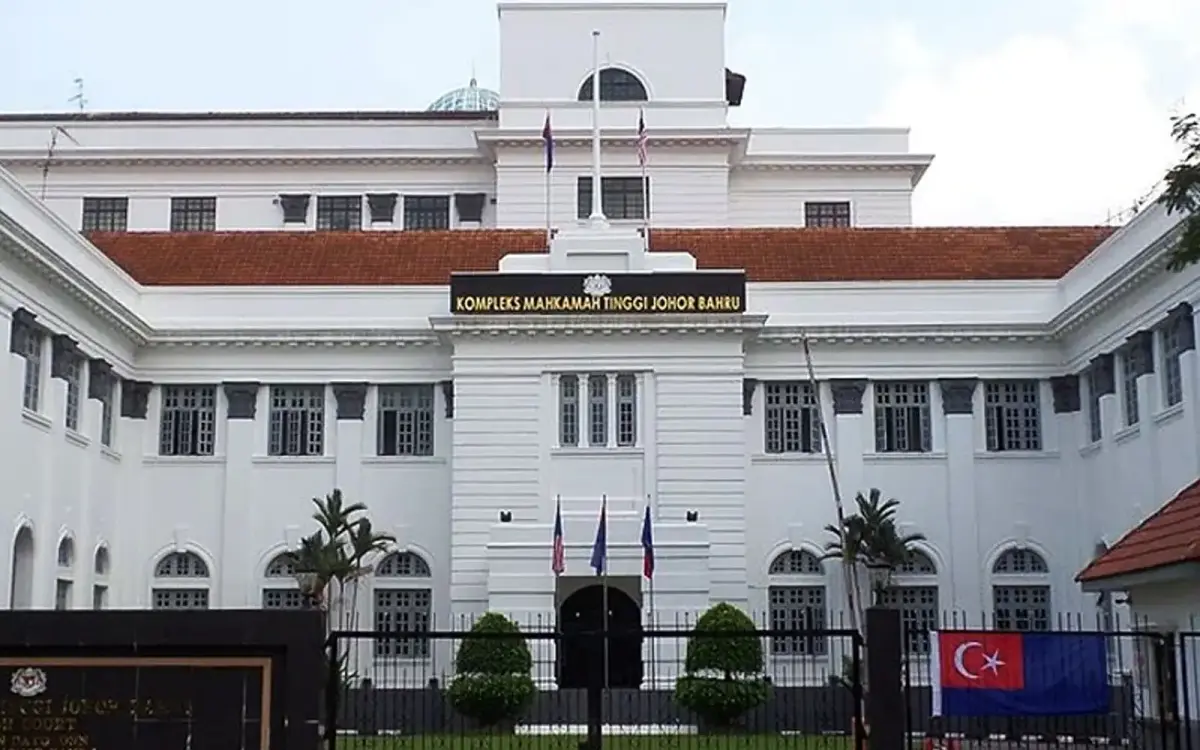
Dance instructor awarded RM400k in medical negligence suit
The High Court awarded the sum following an assessment of damages after the government conceded liability in a suit filed in 2021. The Johor Bahru High Court has ordered the government to pay approximately RM400,000 in damages to a dance instructor after ruling in her favour in a medical negligence suit following an assessment of damages on Tuesday. The case stemmed from a surgery six years ago in which both her ovaries and fallopian tubes were removed. Justice Shamsulbahri Ibrahim awarded the 48-year-old woman RM400,815.45 overall, including RM300,000 for pain and suffering. She also succeeded in recovering RM35,000 for loss of earnings over a period of 21 months, reimbursement of RM9,652.50, being the cost of treatment received in India, and expenses for travel and accommodation incurred. The suit, filed in 2021, named the government, the director of the Sultan Ismail Hospital in Johor Bahru and five doctors who were involved in surgery carried out on the woman on Dec 24, 2018. The government admitted liability, leaving only damages to be assessed by the court. The woman had been admitted for an abdominal hysterectomy with bilateral salpingo-oophorectomy surgery. Following the surgery, she discovered blood in her urine. She also developed a stomach ache and breathing difficulties, and had to be given a blood transfusion as she was suspected to have suffered a bladder injury. The woman then underwent another exploratory surgery on Dec 31, 2018 and was admitted to the hospital’s intensive care unit to treat internal bleeding. Although discharged, she continued to suffer from urine incontinence, vaginal leakage and other complications which continued for several weeks. She was scheduled to be referred to the urology department at Hospital Sultanah Aminah. On Feb 18, 2019, she sought a second opinion from a hospital in Chennai, India, which found a bladder tear extending to the vagina, suggestive of vesicovaginal fistula (VVF). She shared the examination results with the Sultan Ismail Hospital. Following the failure of conservative treatment over several months, she was advised to undergo corrective surgery in September 2019. Despite the surgery, she continued to develop vaginal leakage and a recurrence of VVF. She was then advised that further corrective surgery would be required in future. The woman sought treatment and surgery in Chennai, India, which resolved her health issues. She was represented by lawyers R Jayabalan and Christopher Tan while senior federal counsel Barath Manian appeared for the government. By V Anbalagan

Amendment of The Legal Profession Act 1976
The Legal Profession Act 1976 is amended. The amending statute viz. Legal Profession (Amendment) Bill 2025 received Royal Assent on 8 April 2025 and was gazetted on 22 April 2025. The amendments come into operation today 9 May 2025. The amendment brings about the following key changes: 1. Allowing law firms to be set up as Limited Liability Law Partnerships (LLLP) – in addition to sole-proprietorship and partnership now. 2. Setting up of Bar Council Legal Aid Centre – to give existing legal aid set up a statutory basis. 3. Empowering Bar Council to make rules on payment of fees, salaries, allowances, working conditions of lawyers and pupils . 4. ‘Short call’ now made compulsory for pupils before admission to the Bar. See details in the Act below.

Validity of Will
Questioning the mental capacity of the deceased A will, in general terms, is a document that discloses the intention of the maker (testator) to make a gift to a third party following his death. The will speaks from the death of the testator. It is to take effect only upon his death. A will may be revoked, replaced or amended at any time by the testator prior to his death. A will made overseas is also valid in Malaysia as long as it satisfies the requirements of the Wills Act 1959. The legal formalities of a valid will under sec 5-7 of the Wills Act 1959, amongst others: A will may be challenged on the grounds that the testator did not have the testamentary capacity (mental capacity) when making the will, there was suspicious circumstances in the making of the will or that the testator was under undue influence when making the will. When the challenge is made, the propounder of the will (person relying on the will) has to prove the due execution and validity of the will.[1] Challenging a will on the grounds of lack of testamentary capacity. Frequently, a will may be challenged on the grounds that the testator did not have the mental capacity at the time of making the will. The usual allegations would be e.g he was sick, immobile, hospitalized, after surgery, under medications, or old age. The issue then for the court would be whether this amounts to a lack of ‘testamentary capacity’. Hence it is necessary to understand and appreciate what is ‘testamentary capacity’ as regards the making of a will. ‘Testamentary capacity’ refers to the mental ability of a person to make a will. A testator is said to have the testamentary capacity or a ‘sound disposing mind’ to make a will when he is fully conscious, understands and approves the contents of the will.[2] For this, cogent evidence must be adduced to establish the soundness of the testator’s mind, memory and understanding. It must be proven that he was in a state of mind to understand the nature of his action and its effects; the extent of his property of which he is disposing and able to comprehend the claims to which he ought to give effect. He should not be under any ‘disorder or disease of the mind’ that affects his sense of right or influences his mental ability to make decisions in respect of his property. It is the soundness of the mind and not the bodily health that is to be considered. A person may be physically/bodily sick but may yet retain sufficient mental control, understanding and comprehension including to make decisions on his property – that is enough to prove his testamentary capacity.[3] Old age or imperfect memory alone is not enough to conclude that there was no testamentary capacity without medical proof that he was senile or had lost his memory legally to make a will. To declare a will invalid due to lack of mental capacity, the law requires the presence of an insane delusion or insanity existing at the time of making of the will or when giving instructions for the making of the will; the threshold on the state of mind required is low, a very slight testamentary capacity is sufficient.[4] To conclude, the testator need not be proven to be in perfect health in order for his will to be declared valid. [1] Manogaran a/l Singaraveloo & Ors v. Amanah Raya Bhd & Anor [2024] MLJU 896, HC. [2] Chin Jhin Thien & Anor v. Chin Huat Yean @ Chin Chun Yean & Anor [2020] 4 MLJ 581, FC. [3] Khaw Cheng Bok & Ors v. Khaw Cheng Poon & Ors [1998] 3 MLJ 457, HC. [4] Tho Yow Pew & Anor v. Chua Kooi Hean [2002] 4 CLJ 90, CA. R. Jayabalan MESSRS R. JAYABALAN
RECUSAL APPLICATION – CRITICAL COMMENTS AND PRECONCEIVED VIEWS BY TRIAL JUDGE
In an application for recusal the applicant must fulfill the ‘real danger of bias’ test. It must be shown that in the objective view of a fair minded and informed observer, there is a real danger of bias on the part of the judge if he continues to hear and decide the case – this must be proven with clear and cogent evidence. Question. What if the trial judge makes critical comments about the merits of a party’s case or expresses unfavourable views before the trial or in the midst of the trial? What if the judge makes harsh comments, expresses impatience or annoyance and critical of the party or his counsel? Does this show real danger of bias in order to be sufficient ground to seek recusal of the judge? Well, very unlikely! Harsh, caustic, sarcastic, impatience, sharp remarks, adverse comments by a judge of a party’s case or of the party and his counsel, in themselves, do not fulfill the ‘real danger’ test. (Unless the judge is seen to descend into arena or demonstrates animosity or antipathy towards a party or his lawyer.) The fact that the judge expressed critical remarks of a party’s case at the outset or during trial also do not fulfill the ‘real danger test’ as they do not amount to prejudging the case. On the contrary, such comments may in fact assist the parties to understand what’s going on in the judge’s mind and to address the matter accordingly in their submissions. See:1. Residence Hotels & Resorts Sdn Bud v. Seri Pacific Corporation [2013] MLRHU 12702. Ewe Saw Lee v. Dato’ Sri Andrew Kam Tai Yeow [2023] MLRHU 868. R. Jayabalan MESSRS R. JAYABALAN

A GUIDE ON PREPARING WITNESS STATEMENT AND MANAGING WITNESS
1. Interview the client in depth to identify potential witnesses. 2. Identify witnesses who would co-operate voluntarily and those requiring subpoena. 3. Ask the client to arrange for the witness to attend a meeting with the lawyer. 4. Interview the witness, take down a detailed statement – in the presence of the client. 5. Inform the witness why the need to call him, and the process involved – examination-in-chief, cross-examination and re-examination. 6. Agree on the witness allowance, travelling and accommodation arrangements for court attendance. 7. Prepare the draft witness statement. 8. Go through the draft with the witness – in the presence of the client. 9. Impress upon the witness that he is free to amend as he wishes and that he must be fully comfortable and confident with every sentence – if he is not certain or uncomfortable remove the sentence. 10. Witness should not feel that he is being forced to say something beyond his wish. 11. There may be varying versions on certain facts between the witness and client – resolve it there and then. 12. Inform that the statement has to be filed in court and once filed it ought not be amended except for very good reason. 13. When a witness is not comfortable to say certain facts but if it requires to be said (e.g he is the best witness on that fact) and important to the client’s case then explain the law on that matter and why it has to be said by him. 14. Go through the finalised statement with the witness again in the presence of the client and get the witness’ confirmation on the contents. 15. Prepare the witness for potential cross-examination on every aspect of the statement and related aspects outside the statement. 16. Email a copy to the witness or get acknowledgement of receipt in writing. 17. Witness statement need not be signed before filing as the statement is to be signed in open court. 18. When filing send a copy to the witness and the client and inform that it has been filed and served. 19. Meet the witness 2 or 3 days before the hearing, go through the statement again and the potential cross examination. Re-familiarise the witness with the bundle of documents. 20. Caution the witness on the importance of consistency throughout his examination and the risk of perjury. 21. Advise the witness on the court etiquette, time to be in court, dress code and how to address the judge and lawyers. 22. Ensure that the witness allowance is paid and his travelling and accomodation is attended to. 23. Meet the witness in court, show where he will be seated. If a case is going on, ask him to sit inside to observe the proceedings to get a feel of what is to come. We trust the above would be of assistance to fellow lawyers. R. Jayabalan MESSRS R. JAYABALAN

Operational challenges of a sole proprietor practitioner.
A sole-proprietor juggles multiple roles ranging from a lawyer to an entrepreneur to a manager. Some of the operational challenges faced by a sole proprietor and the means to resolve them are as follows. The challenge of navigating the regulatory requirements under the Legal Profession Act 1976, and the rules and regulations of the Bar Council. The sole-proprietor must stay abreast and be updated with the regulatory changes. Subscribe to circulars and updates issued by the Bar. Attend Bar seminars and briefings on the changes in the regulatory framework. Visit regularly the Bar websites. Financial management is the next challenge. Consider subscribing or buying accounting software tailored for law firms in order to streamline invoicing, systematic recording of earnings and tracking the expenses. Engaging a part-time accountant or bookkeeper ensures proper financial reporting and management. Develop annual and monthly budget so that expenses can be controlled and to avoid wastage and avoidable expenses. Regular auditing of financial operations would help towards ensuring efficiency of the firm’s financial management system. Client acquisition and retention is a serious challenge. The sole-proprietor must make his firm visible and stand-out in the company of the firms in town. Consider a niche area of law in order to stand out and be more visible. However, specialization in a narrow area of practice may not be advisable in a small town. Use social media to showcase the firm’s standing, area of focus and proficiency in that area. A sole-proprietor often lacks infrastructural support. Leverage upon technology and Artificial Intelligence to manage this disadvantage. Be inquisitive about apps and softwares tailored for legal practice and small businesses. Collaborate with fellow sole-proprietors. Find ways to work together. R. JAYABALAN Messrs R. Jayabalan

Sexual Harassment at Workplace – A Guide
What is sexual harassment @ gangguan seksual? sec 2 Employment Act 1955 : “sexual harassment means any unwanted conduct of sexual nature, whether verbal, non-verbal, visual, gestural or physical, directed at a person which is offensive or humiliating or is a threat to his well-being, arising out of and in the course of his employment.” (sebarang perlakuan yang tidak diinginkan yang bersifat seksual, sama ada lisan, bukan lisan, visual, isyarat atau fizikal, ditujukan kepada seseorang dimana ianya menyinggung perasaan atau memalukan atau mengancam kesejahteraannya, yang timbul dari dan semasa dia bekerja.) What are the types of sexual harassment? “workplace”? Refers to context, not location. ‘Workplace’ is not confined to work premises or during working hours but includes harassment outside working time or premises, as long as it arose out of work relations and within workscope. E.g Sexual harassment: Examples: Sexual harassment exists despite ‘consent’. Co-workers travelling in a car. Three male workers, victim most junior female employee, co-worker feeling tired, told victim he wanted to sleep, she said “tidurlah”. He slept on her lap. Court held there was sexual harassment as the ‘consent’ cannot be voluntary, victim being the most junior and only female would have felt constrained to agree to his request. Using terms of endearment “sayang” , buying flowers on Valentine’s Day, gifts personal in nature e.g perfume is unacceptable – shows the giver’s intention to be personal – sexual harassment. Personal conduct that did not involve others can also be sexual harassment. Claimant in the presence of female employees, loosened belt, opened trouser zip, lowered pants for the purpose of re-tucking his shirt. Held as indecent conduct, sexual in nature. Sexually suggestive statements though did not ‘invite’ recipient but refers to recipient’s conduct with others also a sexual harassment. Victim asked for urgent signature in a form, claimant’s reply: “kalau mahu malam ini dengan suami awak, malam ini juga suami awak bagi ke?”. Court held this was unacceptable, and sexual harassment. Being cheeky and making “silly jokes” – persistently calling for lunch, sending card with words e.g ‘darling’ and saying ‘love you’ – also sexual harassment. What victims should do? Object to the wrongful act. Show that the act was unwanted/unwelcomed. Record the wrongful act. Complaint to the employer. Do not delay. If employer fail to act, employee can leave and claim constructive dismissal. Make a police report. Victim may also file a civil claim for compensation for tort of sexual harassment or assault/battery. Injunctions may be obtained against the harasser. Victim may sue the harasser and also the employer for breach of employer’s duty to provide a safe working place. No witness? Its ok. It does not matter that there was no witness who saw the harassment or that there was no corroboration. Absence of corroboration does not defeat a claim of sexual harassment. Why? A victim does not file a complaint of sexual harassment for the pleasure of it as she is exposed to public ostracization and face anxiety at workplace and in public. Furthermore, such conducts take place in private. What employers must do? Provide a safe workplace for employees. Have a formal policy on sexual harassment at workplace. Employer must provide protocol for complaints of sexual harassment. Reporting channels must be confidential as the offender might retaliate.When there is a complaint, employer must take steps to investigate and punish the harasser e.g suspension, dismissal through due inquiry, punishment must be proportionate to the misconduct. Warning to harassers Sexual harassment at workplace is a ‘misconduct’ (salahlaku), employee can be dismissed.. Sexual harassment is an offence under the Penal Code – police report, maybe charged in court e.g for molest, outraging modesty and other sexual offences. Civil suit for damages – the victim may file, harasser to pay compensation, injunction maybe issued. R. Jayabalan Messrs R. Jayabalan
Evidence of interested witness – Ten points.
1. All persons are competent to testify. 2.Merely being a party to the suit does not make one an interested witness. 3. There must be proof that one is an interested witness – no speculation. 4. No legal presumption that an interested witness should not be believed. 5. No rule that evidence of interested witness must be rejected on that account alone. 6. Evidence of an interested witness requires corroboration in order to be relied upon. 7. Evidence of interested witness must be weighed in the face of the totality of the evidence and overall circumstances. 8. Evidence of interested witness can be relied upon if the evidence had a ring of truth in it. 9. Whilst the court must be cautious of evidence of interested witness, the court must not be suspicious of such evidence. 10. The court may accept the evidence of interested witness either in part or in whole – with proper justifications. See: Teoh Kiang Hong v. Theow Say Kow @ Teoh Kiang Seng, Henry [2025] 2 AMR 381, FC. R. Jayabalan MESSRS R. JAYABALAN

TO OBEY OR DISOBEY EMPLOYER’S INSTRUCTION?
Can the employee choose to disobey an instruction from the employer because he thinks the instruction was unreasonable or simply wrong? The short answer is ‘no’! The duty of obedience to employer’s instruction is fundamental to the employment contract. The employee must follow all lawful and reasonable instructions from the employer, even if he thinks the instruction is manifestly wrong. What if the employee thinks the instruction was unlawful? Well, the employee must comply first with the instruction and question it’s validity later. Why? well, if the employee is given the right to disobey an instruction that he thinks is illegal, it would be impossible for the management to maintain discipline at workplace, every employee will decide for themselves whether to follow an instruction or otherwise. That is not in the best interests of the business. Wilfull disobedience, defiance or insubordination is a serious misconduct that warrants summary dismissal. Beware. Don’t be too smart with the boss! 😁 See: Mohamad Syafiq v. Nityo Infotech Services (2025) 1 MELR 306. R. Jayabalan MESSRS R. JAYABALAN