
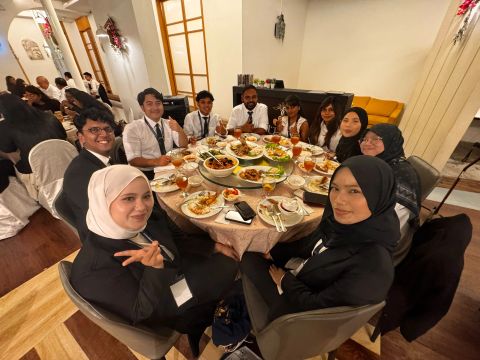
NS Bar Law Conference 11.9.2026 Met this jolly bunch of pupils over lunch and ended up answering their curiosities on legal practice/ lawyers. Points shared: 2. Prioritise learning the procedures at pupillage – RHC and CPC. 3. Educate on the LPA 1976 and rules there especially practice and etiquette rules. 4. Masters are busy, be a busybody and bother them with questions, that’s a sign of interest to learn. 5. No specialising now or in the early years of practice. Learn and be exposed to as much variety of work possible. It’s the learning and exposure. 6. Get to know seniors. Be the first to initiate. A nod, smile or ‘good morning’ usually enough to break the ice. Seniors might look garang, maybe snobbish also, but actually softies once you know them. 7. Seniors were young once. Everything we point/blame you now, chances are we would have done the same in our early years too. So we are not perfect either. 8. Best way to research is to start with a good text book first, then move on to case laws. Don’t start with online search and staring at hundreds of cases on that one keyword search. 9. Learn good drafting in early years. Drafting letters, pleadings and submissions. Short sentences. Short paras. Short cause papers – although easier said than done! 😂 10. Enjoy practice. You are in it for the long run. Practice is not a sprint, it’s a marathon. Enjoy the race in order to last!
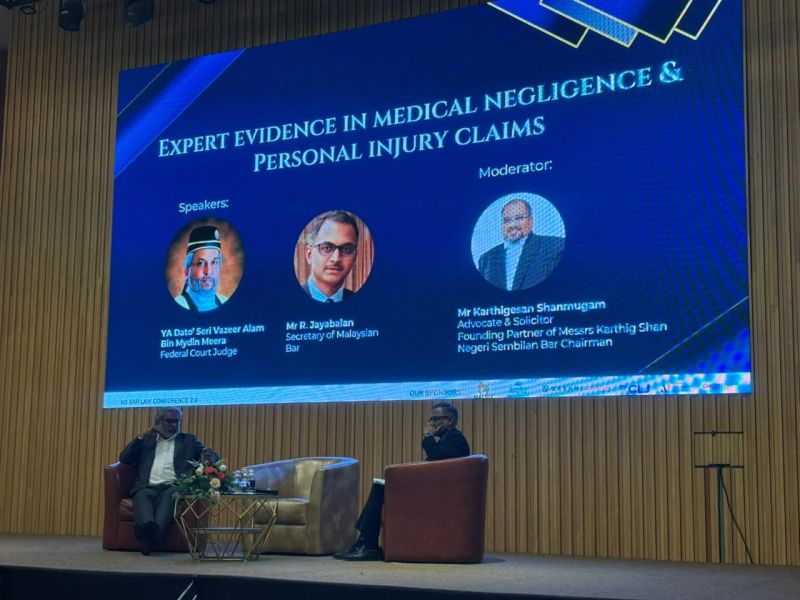
Expert Evidence in Medical Negligence & Personal Injury Claims | NS Bar Law Conference 2026
Negeri Sembilan Law Conference 2026 11.9.2026 Had the opportunity to share thoughts on expert evidence in medical negligence and personal injury claims along with Federal Court Judge, Justice Dato’ Seri Vazeer Alam, focusing on how the Courts decide when there are conflicting expert opinion.
Retrospectivity of Arbitration Clauses, Unilateral Reference and Stay
RETROSPECTIVITY OF ARBITRATION CLAUSE, UNILATERAL REFERENCE, AND STAY. A recent decision we obtained from the Court of Appeal outlined the following: The grounds of decision is below.
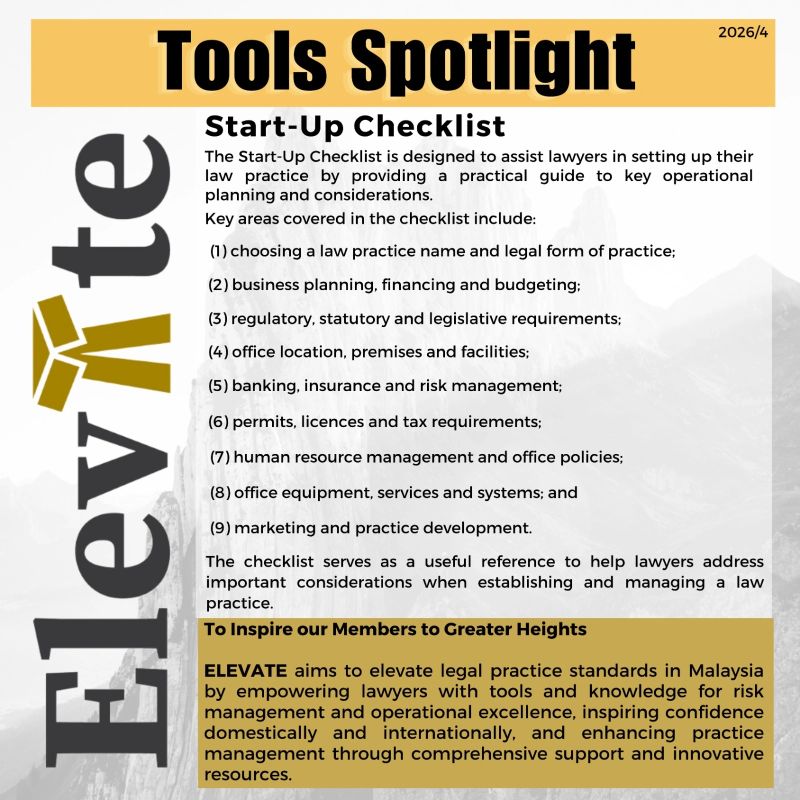
Starting a Law Firm: Malaysian Bar Circular No. 307/2026 Start-Up Checklist
Setting up your own firm? Here are the needs, dos and don’ts. See Malaysian Bar Circular No. 307/2026, including the ELEVATE Tools Spotlight and Start-Up Checklist. The Start-Up Checklist provides a practical guide to key operational planning considerations for lawyers establishing and managing a law practice, including the practice name and legal form, business planning and budgeting, regulatory requirements, premises, banking, insurance and risk management, permits, licences and tax, human resources, office systems, and practice development.
Malaysian Bar
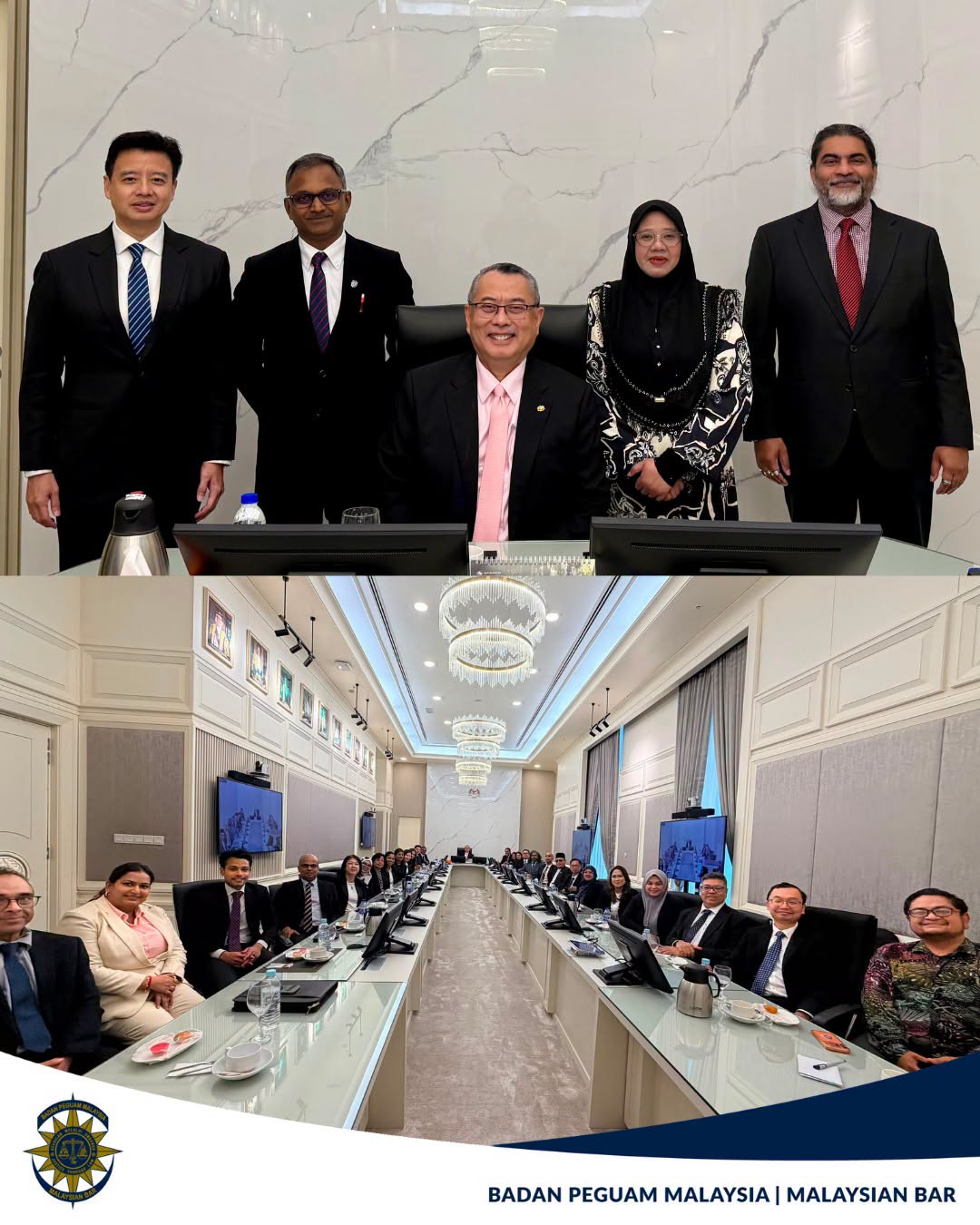
On 13 Aug 2026, the Malaysian Bar paid a courtesy visit to the Chief Justice of Malaysia, YAA Tun Wan Ahmad Farid b Wan Salleh, at the Palace of Justice, Putrajaya. The Malaysian Bar delegation was led by the President of the Malaysian Bar, Anand Raj and comprised 30 Bar Council members as well as officers from the Malaysian Bar Secretariat. The meeting, held at the request of the Malaysian Bar, was a gesture of respect and goodwill as well as to reaffirm the Bar’s commitment to maintaining a close and constructive relationship with the Judiciary in upholding the rule of law and the proper administration of justice. The Malaysian Bar expresses its appreciation to the Chief Justice and his office for the warm welcome extended during the visit. #MalaysianBar#BadanPeguamMalaysia#BarCouncil#Malaysia
NS Bar Reference Proceedings
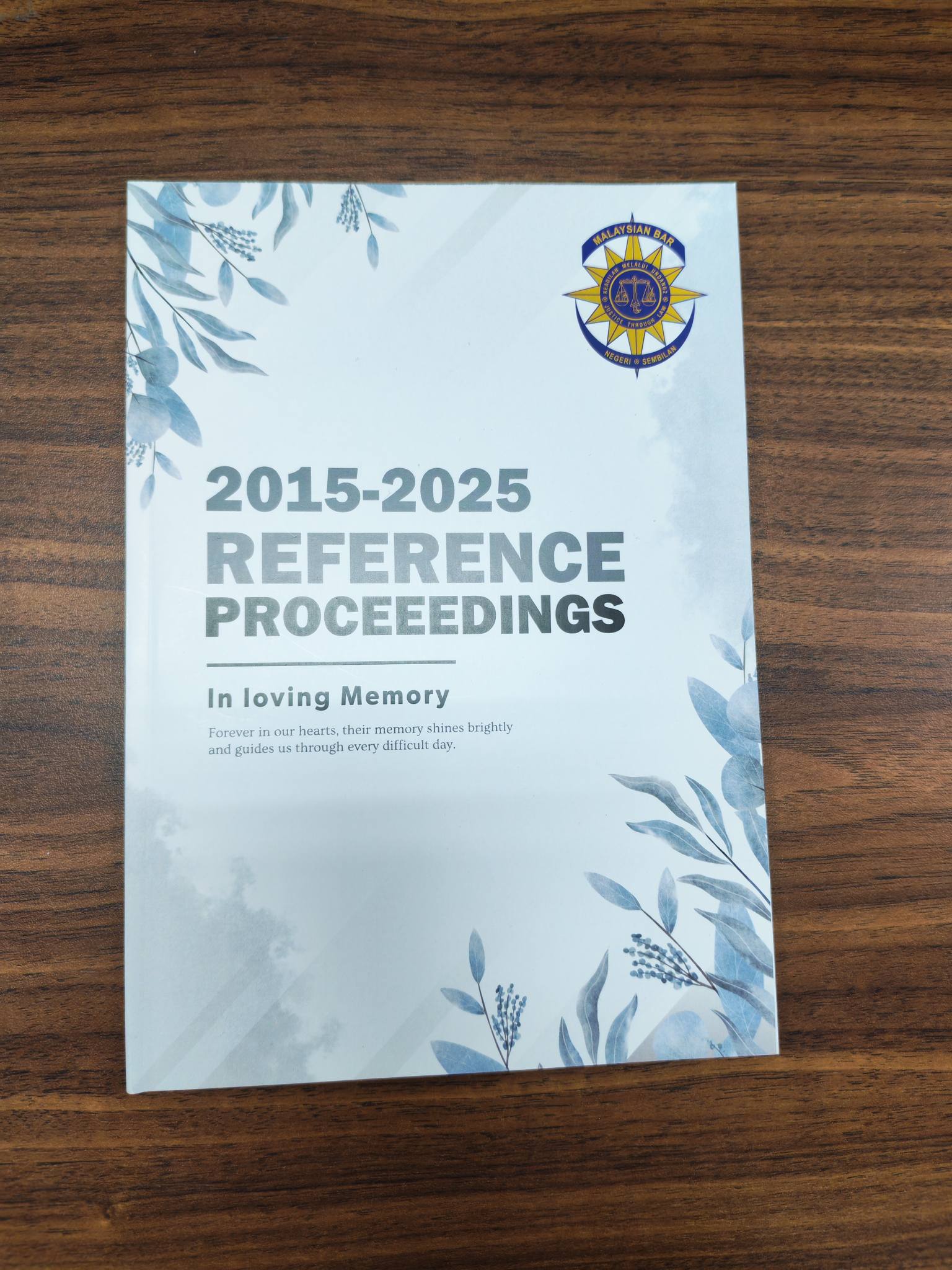
The practice of law is often exacting and demanding, requiring long hours, personal sacrifices, and an unwavering commitmentn to duty. Behind every member of the Bar stands a family whose support, patience, and understanding make that service possible. Their sacrifices are seldom seen and even more rarely acknowledged, yet they are an indispensable part of the lawyer’s journey. In doing so, they, the families, too contributed, in their own quiet way, to the administration of justice and to the strengthening of the profession.” Karthigesan Shanmugam #negerisembilanbar

Court affirms RM580,000 damages to woman injured during childbirth
The Johor Bahru High Court has ordered the government, Sultan Aminah Hospital, its director and 4 doctors to pay RM300,000, RM250,000 and RM30,380 in general, aggravated and special damages respectively. (File pic) PETALING JAYA: The High Court in Johor Bahru has upheld an award of over RM580,000 in damages to a woman who sued for medical negligence over complications arising during childbirth at a government hospital in May 2017.The woman, Nirwana Tamba — an Indonesian national married to a Malaysian — suffered serious injuries at the delivery of her newborn daughter, Tabita anak Nelson, who died four days later. Nirwana had filed her suit in the sessions court seven years ago, naming the government, the Sultanah Aminah Hospital, its director and four doctors as defendants. On May 31, 2023, the trial court awarded her RM300,000 in general damages for pain and suffering and loss of amenities, RM250,000 in aggravated damages, and RM30,380 as special damages. The government appealed to the High Court against liability and quantum, while Nirwana cross-appealed for a higher amount of damages. Both parties have now turned to the Court of Appeal. In his judgment, Justice Noor Hisham Ismail acknowledged as trite law that damages serve as compensation, not reward, let alone a punishment. He said that in assessing damages, the court should not be motivated by sympathy but must award fair compensation based on cogent evidence. Relying on legal precedent, Noor Hisham found that the award of RM300,000 for general damages fell within the range awarded in comparable authorities. Although the events were grave, he said increasing the award to reflect the full extent of the tragedy would risk double compensation. The judge said the sum of RM250,000 awarded as aggravated damages had already addressed the defendants’ conduct and the indignity the plaintiff suffered. He said enhancing general damages on the same factual basis would compensate the plaintiff twice for the same elements. Nor Hisham said the trial judge did not fall into error in awarding damages after finding the defendants liable. The facts of the case revealed that Nirwana was admitted in May 2017 for a planned normal delivery of her third child. Within 12 hours of admission, the baby suffered brain damage due to severe oxygen deprivation. Nirvana’s uterus, bladder and vagina were badly torn, and the situation escalated into an emergency Caesarean section. She also suffered a serious injury to her left arm in the operating theatre. The baby passed away four days later. In her statement of claim, Nirwana said she had suffered significant physical injuries and profound psychological trauma due to the event. The trial judge found the government and the treating defendants negligent in both antenatal and labour management. Lawyers R Jayabalan and Christopher Tan appeared for Nirvana, while federal counsel Zahilah Yusof, Suhana Sabil and Nur Najihah Hamidi represented the government. https://www.freemalaysiatoday.com/category/nation/2026/03/12/court-affirms-rm610000-damages-to-woman-injured-during-childbirth https://www.instagram.com/p/DVxb9kBD4Fa

Dismissal for poor performance.
It is not uncommon for employers to deploy the grounds of ‘poor performance’ as means of dismissal of employee. This, is an abuse of employer’s rights and managerial prerogative. The Industrial Court will intervene and struck down such dismissals. The following general guidelines apply when determining the bona fide of dismissals on grounds of poor performance: 1. Employer must prove that the employee was warned of his poor performance. 2. Employee was accorded sufficient opportunity to improve, and; 3. Despite the above, the employee failed to sufficiently improve his performance. Employers to be mindful that: 1. Poor performance is not misconduct. 2. Prior warnings of poor performance must be given. 3. Employer must undertake rehabilitative measures to assist underperforming employees. 4. If the employee is placed on Performance Improvement Plan (PIP), the PIP must be in good faith, clear, reasonable and complied with closely. 5. Where targets are set for underperforming employees, the target must be reasonable. Unreasonable targets can be struck down as unfair labour practice. 6. Employees must be given sufficient time, guidance and opportunity to improve. See– Ireka Construction Berhad v. Chantiravathan a/l Subramaniam James [1995] 2 ILR 11 – Lee Hsin Ying v. Sleekflow Technologies Sdn Bhd – Award No. 55 of 2026

New publicity rules for lawyers and law firms at Malaysian Bar 2026
The new publicity rules for lawyers and law firms at Malaysian Bar takes effect today 1.1.2026 – attached below. So what’s new? Some highlights: 1. Publicity can be via printed or electronic medium, exposure in any public medium, appearances in seminars/conferences, or via any contact with prospective client. 2. Overriding Principles – any publicity should not affect the dignity and standing of the legal profession which includes acting with integrity, acting in the best interest of client, acting in a manner that would uphold trust and confidence in the lawyer and the legal profession. 3. No misleading, deceptive, false, offensive publicity that adversely affects dignity and standing of the profession or calculated to bring the profession into disrepute. This includes material misrepresentation, omits a material fact, information that cannot be verified, likely to create unjust expectation about the results. 4. May claim specialisation but not ‘expert’. The claim for specialisation must be justifiable. 5. The publicity shall not specify the fees charged, no comparison with fees or quality of service by other lawyers, make no reference to cases handled previously in such a way that could result in breach of confidentiality. 6. Can publicise outside Malaysia BUT – in a manner not contrary to the laws of that country, without diminishing public confidence in the legal profession in Malaysia or brings the profession in Malaysia into disrepure. 7. Firms to appoint a person to be held responsible for its publicity initiatives. 8. Essentially, the new rules signals more space for publicity for lawyers and law firms. 9. But it is not open season (yet) – the ‘overriding principles’ must be complied with and the need to respect the standing and dignity of the profession is still there – in deciding the form, content and medium of the publicity, 10. When there’s a breach BC can order alteration or removal of the publicity. So what’s the best way to describe the changes? Perhaps this. Under the old rules, publicity maybe made only in the manner prescribed, everything else cannot. Under the new rules, all contents/forms possible provided the overriding principles are complied with.

Recovery of Free Maintenance Package – Parcel Purchasers
A recent case handled by us for protection of the parcel purchasers’ right (via the JMB) to realise the benefits of a free maintenance package promised by developer to purchasers, after the developer had voluntarily wound itself up and its liquidator having entered into a PA with the third party. Essentially the High Court agreed that the facts and circumstances as proven had led to the existence of an implied contract between the JMB and the third party resulting in the third party having stepped into the shoes of the developer and thus bound by the obligations and liabilities of the developer – here, to pay for the Free Maintenance Package sum totalling RM3.6 m as promised to the purchasers.