
HAPPY LABOUR DAY to all lawyers labouring out there day in day out with killing deadlines, nightmare opponents, discounty clients, gossipy colleagues; Where ‘urgent’ means yesterday, ‘short’ means 50 pages, ‘quick call’ steals an hour; Where sleep is optional, weekends are fictional, and clients missing after every bill; Here’s to surviving clients, nightmare opponents, late evening emails, and of course, our lovely ever-patient judges — occasionally reminding “counsel, how long more you will take!” May your files close themselves, your clients pay on time, your opponents be punctual and your judges read their files! HAPPY LABOUR DAY — because if anyone truly understands labour, its us, LAWYERS! 😆😆😆 R. JAYABALAN
STILL STANDING: Small Firm Stories, Challenges & Solutions
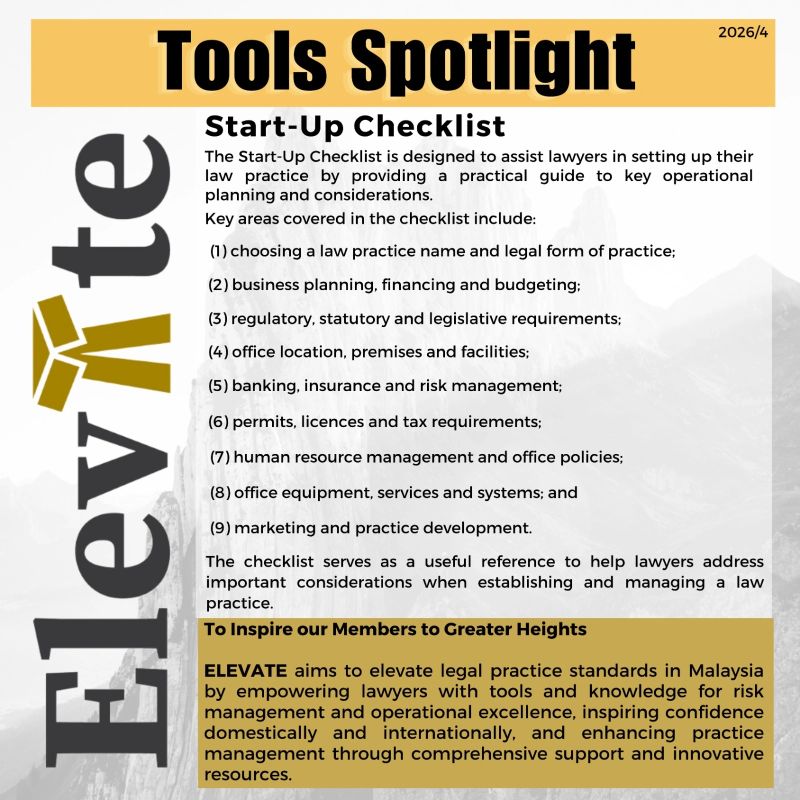
Most of us started with a dream: freedom, unlimited potential, and keeping all the money. Then reality hit. This week, the Kelantan Bar Committee hosted a talk by Mr. Jayabalan on “STILL STANDING: Small Firm Stories, Challenges & Solutions.” It wasn’t just another CPD session. It was a masterclass in survival. For those of us running firms with ≤5 lawyers (that’s 70% of us), here are the 8 brutally honest lessons that stopped me mid-scroll: 1. Client Management (The “Anak Guam” Reality Check) · Your client is not your friend. They are a potential enemy who can sue you. · Golden rule: Always have a Warrant to Act in writing. Fees, scope, everything. You don’t need a happy client. You need a satisfied one. 2. Financial Management · Stop competing on salary. You’ll lose. · But here’s the hack: Group Law Practice. 7 firms, one building. Share staff, machines, subscriptions. The rules allow it. 3. Fees Recovery (Stop Undercutting!) · Contingency fees? Illegal. Conditional/Success fees? Different story. · Charge high upfront. Court limits have gone up 4x (RM1mil for Sessions Court now). · And please—fix an appointment for consultations. Stop giving free advice over the phone. 4. Staff Management · Hire for adaptability. School leavers are teachable. 5. Succession Planning (The Dark Truth) · If you’re a Sole Proprietor and you die or become incapacitated? The Bar Council will step in. They act like a liquidator. · Groom a successor. Or go into partnership. 6. Risk Management · You can be sued for negligence. Or face criminal charges. · Conveyancing checklist? Already available at the Bar Council. Use it. 7. Market Positioning (The Gossip Rule) · “Gossip runs faster than any advertisement.” · Don’t say “expertise.” Say “specialized in.” · NEW RULE (Legal Profession Publicity Rules 2025, eff 1.1.2026): Liberalised publicity is here! Billboards are fine. Just don’t compare fees with other lawyers or mislead. 8. Mental Health · Suicidal tendency is high in this profession. · Bar Council gives 5 free, confidential counselling sessions. Use them. Final gut punch from Mr. Jayabalan: “It does not mean that his only access to justice is through me.” You are allowed to say NO. You are allowed to discharge yourself. Don’t be too nice. Mr Jayabalan Raman Kutty, thank you for this. Truly mindblowing.
NS Bar Reference Proceedings
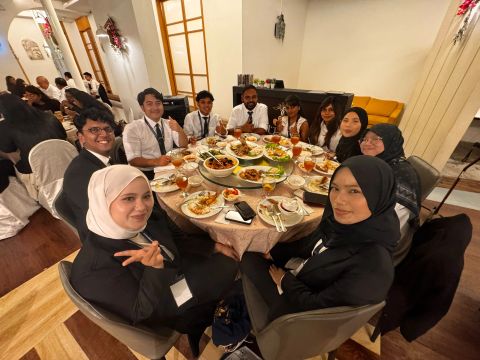
The practice of law is often exacting and demanding, requiring long hours, personal sacrifices, and an unwavering commitmentn to duty. Behind every member of the Bar stands a family whose support, patience, and understanding make that service possible. Their sacrifices are seldom seen and even more rarely acknowledged, yet they are an indispensable part of the lawyer’s journey. In doing so, they, the families, too contributed, in their own quiet way, to the administration of justice and to the strengthening of the profession.” Karthigesan Shanmugam #negerisembilanbar
Employment Law Conference 2026
Employment Law Conference 2026 – shared a session with two other speakers on Transfers, Closures and Mergers – Handling Human Resources Effectively. A well organised and supported conference with plenty of other topics of interest to Industrial Law practitioners! Congratulations to the Industrial & Employment Law Committeee, the Co-Chairs and the Organising Committee!
Court affirms RM580,000 damages to woman injured during childbirth
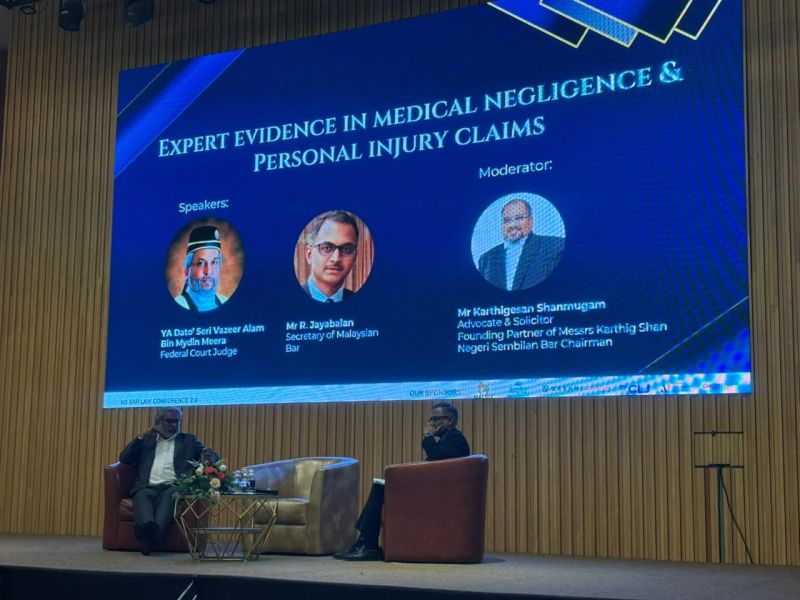
The Johor Bahru High Court has ordered the government, Sultan Aminah Hospital, its director and 4 doctors to pay RM300,000, RM250,000 and RM30,380 in general, aggravated and special damages respectively. (File pic) PETALING JAYA: The High Court in Johor Bahru has upheld an award of over RM580,000 in damages to a woman who sued for medical negligence over complications arising during childbirth at a government hospital in May 2017.The woman, Nirwana Tamba — an Indonesian national married to a Malaysian — suffered serious injuries at the delivery of her newborn daughter, Tabita anak Nelson, who died four days later. Nirwana had filed her suit in the sessions court seven years ago, naming the government, the Sultanah Aminah Hospital, its director and four doctors as defendants. On May 31, 2023, the trial court awarded her RM300,000 in general damages for pain and suffering and loss of amenities, RM250,000 in aggravated damages, and RM30,380 as special damages. The government appealed to the High Court against liability and quantum, while Nirwana cross-appealed for a higher amount of damages. Both parties have now turned to the Court of Appeal. In his judgment, Justice Noor Hisham Ismail acknowledged as trite law that damages serve as compensation, not reward, let alone a punishment. He said that in assessing damages, the court should not be motivated by sympathy but must award fair compensation based on cogent evidence. Relying on legal precedent, Noor Hisham found that the award of RM300,000 for general damages fell within the range awarded in comparable authorities. Although the events were grave, he said increasing the award to reflect the full extent of the tragedy would risk double compensation. The judge said the sum of RM250,000 awarded as aggravated damages had already addressed the defendants’ conduct and the indignity the plaintiff suffered. He said enhancing general damages on the same factual basis would compensate the plaintiff twice for the same elements. Nor Hisham said the trial judge did not fall into error in awarding damages after finding the defendants liable. The facts of the case revealed that Nirwana was admitted in May 2017 for a planned normal delivery of her third child. Within 12 hours of admission, the baby suffered brain damage due to severe oxygen deprivation. Nirvana’s uterus, bladder and vagina were badly torn, and the situation escalated into an emergency Caesarean section. She also suffered a serious injury to her left arm in the operating theatre. The baby passed away four days later. In her statement of claim, Nirwana said she had suffered significant physical injuries and profound psychological trauma due to the event. The trial judge found the government and the treating defendants negligent in both antenatal and labour management. Lawyers R Jayabalan and Christopher Tan appeared for Nirvana, while federal counsel Zahilah Yusof, Suhana Sabil and Nur Najihah Hamidi represented the government. https://www.freemalaysiatoday.com/category/nation/2026/03/12/court-affirms-rm610000-damages-to-woman-injured-during-childbirth https://www.instagram.com/p/DVxb9kBD4Fa
Dismissal for poor performance.
It is not uncommon for employers to deploy the grounds of ‘poor performance’ as means of dismissal of employee. This, is an abuse of employer’s rights and managerial prerogative. The Industrial Court will intervene and struck down such dismissals. The following general guidelines apply when determining the bona fide of dismissals on grounds of poor performance: 1. Employer must prove that the employee was warned of his poor performance. 2. Employee was accorded sufficient opportunity to improve, and; 3. Despite the above, the employee failed to sufficiently improve his performance. Employers to be mindful that: 1. Poor performance is not misconduct. 2. Prior warnings of poor performance must be given. 3. Employer must undertake rehabilitative measures to assist underperforming employees. 4. If the employee is placed on Performance Improvement Plan (PIP), the PIP must be in good faith, clear, reasonable and complied with closely. 5. Where targets are set for underperforming employees, the target must be reasonable. Unreasonable targets can be struck down as unfair labour practice. 6. Employees must be given sufficient time, guidance and opportunity to improve. See– Ireka Construction Berhad v. Chantiravathan a/l Subramaniam James [1995] 2 ILR 11 – Lee Hsin Ying v. Sleekflow Technologies Sdn Bhd – Award No. 55 of 2026
SOLICITOR’S ‘MISCONDUCT’ – personal culpability must be present.
The Court of Appeal recently allowed an appeal by a solicitor who was found guilty of misconduct by the Disciplinary Board and suspended for 6 months – the Grounds of Decision below. The ‘misconduct’ in short: the solicitor was a partner in the firm, handling a winding up matter; his LA had emailed an order that was not accurate and premature. The DB held that this was a misconduct by the solicitor as he was in charge of the matter. The High Court had upheld the DB’s decision amongst others on the basis of vicarious liability. The Court of Appeal however disagreed and allowed the appeal. It was held amongst others that: ■ In a misconduct allegation, there must be personal culpability on the part of the solicitor. ■ ‘guilt’ is inseparable from personal culpability, reflecting individual moral and legal fault, whereas civil liability can exist without personal blame e.g vicarious liability? ■ the foundation of disciplinary responsibility lies in personal culpability. ■ A finding of misconduct cannot rest solely on the fact that the solicitor had authority/responsibility over the ‘erroneous’ subordinate. ■ Disciplinary process is not intended to impose vicarious liability, as in civil proceedings. ■ Disciplinary process is to determine whether the individual legal professional has, by act or omission, fallen below the standards of integrity, competence, or diligence expected of members of the legal profession. ■ Unlike civil liability, which may arise without proof of fault, disciplinary sanctions are inherently personal and reputational, as they put the legal practitioner’s integrity in issue. ■ The disciplinary tribunal must determine not only whether misconduct occurred within the firm, but whether the legal practitioner personally bears responsibility for it. ■ To hold otherwise would blur the line between civil responsibility and professional discipline, punishing individuals not for their own failings but for those of others. ■ The integrity of disciplinary justice demands that liability be anchored in personal fault. ■ The Appellant could only have been found guilty of misconduct if personally culpable. This decision clarifies once again that disciplinary proceedings is personal in nature in that there must be actual ‘wrongful ‘ act or omission by the said professional and vicarious liability – a concept of attaching liability even without actual personal fault or ommission – has no place in disciplinary proceedings.