
Asking Questions allowed, disagreements allowed, questioning questions allowed, questioning answers more so allowed. Hard truths accepted, bitter truths well swollen. We may not agree all the time, but we agree to disagree all the way! Freedom of expression rolling on – even on rocky surface! https://www.facebook.com/photo/?fbid=10236549610020696&set=pcb.10236549614460807

TO OBEY OR DISOBEY EMPLOYER’S INSTRUCTION?
Can the employee choose to disobey an instruction from the employer because he thinks the instruction was unreasonable or simply wrong? The short answer is ‘no’! The duty of obedience to employer’s instruction is fundamental to the employment contract. The employee must follow all lawful and reasonable instructions from the employer, even if he thinks the instruction is manifestly wrong. What if the employee thinks the instruction was unlawful? Well, the employee must comply first with the instruction and question it’s validity later. Why? well, if the employee is given the right to disobey an instruction that he thinks is illegal, it would be impossible for the management to maintain discipline at workplace, every employee will decide for themselves whether to follow an instruction or otherwise. That is not in the best interests of the business. Wilfull disobedience, defiance or insubordination is a serious misconduct that warrants summary dismissal. Beware. Don’t be too smart with the boss! 😁 See: Mohamad Syafiq v. Nityo Infotech Services (2025) 1 MELR 306. R. Jayabalan MESSRS R. JAYABALAN

Johor Bar Annual Dinner 2025 – A Black Tie Affair!
https://www.facebook.com/photo/?fbid=10236265489037849&set=pcb.10236265505078250

Circa Johore Bar AGM
Meeting old friends and making new friends! Great to see YB Hassan Karim returning to the fold and joining the fun after a break! https://www.facebook.com/photo/?fbid=10236251244241738&set=pcb.10236251249161861
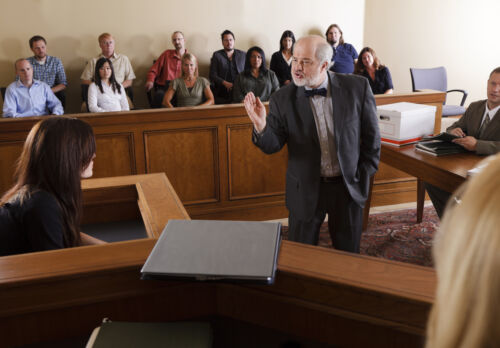
FACING CROSS-EXAMINATION
By R. Jayabalan The use of witness statements have taken away substantial pressure and hurdle off the witnesses in presenting their evidence. A well thought out witness statement ensures that, theoretically atleast, the witness starts on a good footing. But the fate of the evidence in examination in chief mostly (very) hinges on how the witness performs in cross-examination and whether his evidence survives the onslaught of the cross. So what are the key precautions for a witness facing cross-examination? 1. Speak only to answer the question. Otherwise keep quiet, very quiet. 2. Speak up and speak out. Your voice must be heard and comprehensible – before it is understandable. 3. Only answer the question asked, nothing more, nothing less. Be economical (very) with words. 4. Be polite and courteous to the counsel and the judge. Do not argue with the counsel, don’t act smart (remember what they say: you can never win an argument with a lawyer!) 5. If you do not know the answer, say so. If you don’t remember, say so as well. If you need to refer a document, again, say so. 6. In answering don’t guess, presume or speculate. Stick to the facts (only). Don’t be emotional. 7. Answer the question honestly and truthfully. Think like a layman, don’t think like a lawyer, ever. 8. Don’t be pre-occupied thinking where the cousel is heading to. Don’t think a few steps ahead of the counsel. 9. Feel free to ask for the question to be repeated/explained. Take your time in answering but not too long, and certainly not too fast or too quick. 10. In answering a ‘yes’ or ‘no’ question, don’t worry, you can explain later in re-examination. Your counsel will know what to do. May the force (and often Karma!😁) be with you in court. R. Jayabalan MESSRS R. JAYABALAN

Kelantan Bar Civil Law Conference.
17.2.2025. Opportunity to speak on recent trend of damages in medical negligence claims on Kelantan Bar’s invitation. Wonderful Organization. Enjoyed the other speakers sessions – Razlan Hadri, Ric Wee, Jamie Wong and Su Ann. Well done Leeza Muhammad Saya Ahmad and Kel Bar! https://www.facebook.com/photo/?fbid=10236204061942210&set=pcb.10236204065182291

Malaysian Bar Annual Dinner. A Night of Cultures.
https://www.facebook.com/photo/?fbid=10236177314553542&set=pcb.10236177322993753

The bastard conjunction “and/or”
By R. Jayabalan Solicitors love to use the conjunction “and/or” in their pleadings and other cause papers. Mostly when they are unsure and so as to be cautious. How does the court look at this “and/or”? Well, interestingly, the court has referred to “and/or” as ‘bastard conjunction’. In Bonitto v. Fuerst Bros & Co Ltd [1944] 1 All ER 91 at 92, it was said this bastard conjunction has become the Commercial Court’s contribution to Basic English. The use of ‘bastard conjunction’ is to be discouraged and generally disapproved by writers on drafting. Why? Because the device “and/or” is an “embarrassing expression which endangers accuracy” – see Canberra Data Centres v. Vibe Constructions [2010] ALR, vol 266, 33 at 45, SC. R. Jayabalan MESSRS R. JAYABALAN

JB Hindu Lawyers Thaipusam thaneer panthal! At Jalan Kolam Air Temple.
https://www.facebook.com/photo/?fbid=10236132945404341&set=pcb.10236132946364365

Small Firms Practice Seminar 2025, Muar
https://www.facebook.com/photo/?fbid=10236108130223977&set=pcb.10236108130783991