


An employer has the right to transfer an employee from one post to another within the company. This is part of the powers of the employer who has a right to organize his business. But is that power absolute? Is the power subject to restrictions? This issue came up before the Industrial Court in Chan Phaik Leng v. Meda Healthcare Sdn Bhd [2018] MELRU 2231 . We represented the employee. The employee was employed for 16 years in the company. She started as a Medical Representative in 2000 with a monthly salary of RM2,000. She gained promotions and by April 2016 had become the Senior Sales Manager with a monthly salary of RM8,000. The company then transferred her to a newly created position Key Account Manager with no change in the salary. She objected as to her the new position was effectively a demotion. The company defended the change on grounds that the new position was in line with their new business strategy to place more focus on their key customers; it was an equally important position that required experience and expertise and in the company’s assessment she was the best person. The company said that it was within their rights to make the changes to suit the business needs. They refused to retract the transfer but was prepared to allow her to keep the title Senior Sales Manager so as to appease her. She rejected this and claimed constructive dismissal. The Industrial Court held that under the terms of the contract of employment the company has the right to carry out the transfer; that the company has given the required explanations, it was not a demotion and that she failed to prove that the company’s decision was not bona fide. The claim was dismissed. The employee applied for judicial review. The High Court held that the Industrial Court had erred. Although the employer has the powers to transfer/redesignate an employee in the interest of the business, that power is not absolute and subject to restrictions under the law. Amongst others, the transfer should not involve a change in the condition of service to the detriment of the employee – referring to the Court of Appeal decision in Ladang Holyrood v. Ayasamy a/l Manikam & 16 Ors [2004] 3 MLJ 339. Here, there were such changes : her subordinates were removed, she will be doing what she was doing five years before, her job responsibilities were reduced and she will be doing what her subordinates were doing under her. That there was no change in her salary or that she was allowed to keep her old title was immaterial. The erosion in responsibilities and changes in the condition of service amounted to a constructive dismissal. The Industrial Court award was quashed and she was awarded backwages and compensation. For the full judgment see Chan Phaik Leng v. Mahkamah Perusahaan & Anor [2019] 6 AMR 19. The company appealed against the decision to the Court of Appeal but the appeal was dismissed. It was held that there was no error in the High Court decision. This case illustrates that although an employer has the right to run his business and organize his workforce that right is however not absolute or unfettered and is still subject to restrictions under the law; the objective being the protection of the rights and dignity of the employee. The law will come to the aid of the employee.

Vacant possession to be delivered with supply of water and electricity
When the developer delivers to the purchaser vacant possession of a house under the sale and purchase agreement that was prescribed under the Housing Development (Control and Licensing) Act 1966 would it be right for the purchaser to expect the actual supply of water and electricity to be available at the house? Or is the developer’s obligation limited to merely applying for the connection of water and electricity to the authorities? This question came up for determination before the High Court in Bandar Eco-Setia Sdn Bhd v. Tribunal Tuntutan Pembeli Rumah & 2 Ors [2020] 5 AMR 251. The purchasers jointly purchased from the developer a double-storey semi-detached house. Upon completion they collected the keys from the developer. They later discovered that there was no supply of water and electricity to the house. They treated this as not amounting to a valid delivery of vacant possession and filed a claim at the Homebuyers Tribunal for liquidated damages. They claimed that under the agreement the developer is obliged to deliver vacant possession with actual supply of water and electricity within the prescribed period of 24 months. There cannot be a valid delivery of vacant possession until there was actual supply of water and electricity. Following this they claimed for liquidated damages for the period from the expiry of the 24 months till the actual supply of water and electricity to the house. The developer contended that under the terms of the agreement their obligation was only to apply for the internal connection of water and electricity from the house to the mains for which there was no time frame to apply and they were not obliged to provide actual supply of water and electricity within the 24 months period. The Tribunal agreed with the purchasers and allowed the claim. The developer was dissatisfied with the decision and applied for judicial review to the High Court. The application came before Wong Kian Kheong J. His Lordship, amongst others, examined the terms of the agreement that was a Schedule I agreement made under reg 11(1A) Housing Development (Control and Licensing) Regulations 1989 of the Act. His Lordship referred in particular to clause 26(1) that defined the manner of delivery of vacant possession. It was stated in clause 26(1) that the developer shall let the purchaser into possession upon the issuance of a certificate of completion and “water and electricity supply are ready for connection to the Building”. His Lordship then referred to the definition of “ready for connection” in the agreement that was defined as “means electrical points and water fittings and fixtures in the said Building have been installed by the Developer and are fully functional and supply is available for tapping into individual building units”. His Lordship held that the clauses are clear. A literal interpretation of the clauses indicate that it is the developer’s obligation to provide actual supply of water and electricity to the property when vacant possession is delivered on or before the 24 months period. His Lordship held that to agree with the developer’s contention would be to render redundant the words “water fittings and fixtures in the said building have been installed by the developer and are fully functional and supply is available for tapping into individual building units” in the definition of “ready for connection” in the agreement. Such interpretation would also further and advance the object of the Act to protect purchasers. To decide otherwise would be detrimental to the interest of the purchasers. The developer in support of their contention relied on the Court of Appeal case of Salmah binti Sulaiman & Anor v. Metroplex Development Sdn Bhd [1997] 1 AMR 592 that held that the developer’s obligation was only to connect electricity and water mains to the internal electricity and water mains and not the flow of water and electricity. His Lordship held that the decision in Salmah Sulaiman would not apply to the agreement in the instant case as Salmah Sulaiman was decided pursuant to rule 12(1)(l) of the Housing Development (Control and Licensing) Rules 1970 and clause 18 of the agreement therein. The said rule 12(1)(l) and clause 18 are clearly different from the relevant clauses in the 1989 Regulations and the definition of “ready for connection” in the current agreement. His Lordship further held that to accept the developer’s contention would be contrary to the purpose of the Act and the 1989 Regulations to protect the purchasers because the purchasers cannot occupy the house without actual water and electricity supply to the house. Such outcome would be clearly unjust to purchasers who have fulfilled all their obligations to the developer under the agreement. The decision of the Tribunal was upheld and the judicial review application was dismissed. This is probably the first reported decision that had decided that vacant possession must be accompanied with actual supply of water and electricity to the house, and not merely making available the connections. This is a decision that very much advanced the interest of purchasers in accordance with the object of the Act and should be welcomed by the public. Hopefully this issue is now put to rest. R. Jayabalan

Highlights of the COVID-19 Bill
Two days ago the Parliament tabled the Malaysian version COVID-19 Bill. It appears that the Bill may have come in late but then again better late than never. The following are the highlights of the Bill. The proposed Act is to be in operation for two years but may be extended further by the Prime Minister. A string of statutes are amended in one fell swoop. The provisions of the Act are also to supersede the provisions of other written laws to the extent of inconsistency. Contractual protection This Part is deemed to be in operation since 18.3.2020 and delivers the contractual protection to parties who failed to meet their contractual obligations due to the laws made to control the spread of COVID-19. Such failures would not entitle the other party to exercise their rights to remedy under the contract. The contracts are however limited to those in the Schedule and may be amended later. The contracts currently covered are contracts for construction and supply of workers and materials for construction, professional services, lease or tenancy of non-residential property, event contracts and pilgrimage related. Any disputes arising from failures to meet the obligation during this period may be resolved by way of mediation process determined by the Minister of Law. The mediation process is however not couched as mandatory. This contractual protection would not affect the actions already taken in relation to the failures before the publication of the Act. This makes one wonder how effective is the protection going to be and whether the delay in enacting this Act is going to cause irreparable harm to the affected parties. Extension of limitation period Part III – VI deals provides for extension of limitation. This part is deemed to be in operation since 18.3.2020 and continues until 31.12.2020. The affected laws are Limitation Act 1953, Sabah Limitation Ordinance, Sarawak Limitation Ordinance and the Public Authorities Protection Act 1948. For the Limitation Act, the limitation period under s 6 that expires during the period 18.3.2020 to 31.8.2020 are automatically extended to 31.12.2020. For the Public Authorities Protection Act, the limitation that expires between 18.3.2020 to 31.8.2020 are similarly extended to 31.12.2020. Extending the amount of indebtedness for insolvency proceedings Part VII deals with insolvency actions and is given limited life time till 31.8.2021 only and may be extended later by the Minister. The threshold for bankruptcy actions is extended to RM100,000 without affecting the actions already commenced before the publication of this Act. Protection to hirers Part VIII deals with modifications to Hire Purchase Act 1967 and is to be in operation between 1.4.2020 to 31.12.2020. The owner under the hire purchase agreement may not exercise the power of re-possession for any default of instalment during the period 1.4.2020 to 30.9.2020 without affecting actions already taken before the publication of this Act. Protection to tenants Part X modifies Distress Act 1951 and is to be in operation from 18.3.2020 to 31.12.2020. A warrant of distress is not to include arrears of rent during the period 18.3.2020 to 31.8.2020 without affecting distress proceedings already commenced. Protection to housebuyers Part XI modifies the Housing Development (Control and Licensing) Act 1966 and is deemed to be in operation on 18.3.2020. This covers the statutory contracts of sale entered into before 18.3.2020. The developer is not allowed to impose late payment interest on purchasers who failed to pay any instalment for the period 18.3.2020 to 31.8.2020 due to the measures under the movement restrictions laws. The purchaser may also apply for the extension of the period to the Minister and the Minister may extend the no-interest period up to 31.12.2020. The period 18.3.2020 to 31.8.2020 is also excluded from the computation of the time for delivery of vacant possession and payment of liquidated damages for late delivery. The Minister may extend the period until 31.12.2020 upon the application of the developer. A purchaser who receives the notice to take vacant possession during the period 18.3.2020 to 31.8.2020 is deemed not to have taken such possession. The computation of defect liability period also excludes the period 18.3.2020 to 31.8.2020 and may be extended by the Minister upon the application of the purchaser. The limitation period for buyers to file a claim at the Homebuyers Tribunal that expired during the period 18.3.2020 to 9.6.2020 is extended from 4.5.2020 to 31.12.2020 and the Tribunal shall have jurisdiction over such claims. Modifications to the Industrial Relations Act 1967 Part XII deals with this. The period 18.3.2020 to 9.6.2020 is excluded from the calculation of the statutory period for lodging of representation, according recognition of trade union and report to the Director General. Modifications to the Courts of Judicature Act 1964 and related Acts Part XVI deals with this and is to be in operation from 18.3.2020. The Chief Justice empowered to issue any direction relating to the business of the Court as may be necessary in the interest of justice, public safety and health or for other sufficient reason. A new provision is inserted empowering the Chief Justice – in the interest of dispensation of justice, public safety and health – to modify any provision of the rules of court or suspend the application of such rules as may be necessary to do complete justice and to ensure that the administration of justice is carried out. Similar amendments are also made to the Subordinate Courts Act 1948 and the Subordinate Courts Rules Act 1955. This amendment that empowers the Chief Justice in respect of the rules is likely to attract spotlight from the Bar as the rules of courts have primarily been within the ambit of the Rules Committee in which the Bar is also represented. General powers to extend time and alternative arrangements for statutory meeting Part XIX empowers the Ministers responsible for any Act to extend the statutory time for carrying out of statutory obligations that were not possible to be performed during the period 18.3.2020 to 9.6.2020 due to the

Court may direct hearing via Skype and allow the use of unaffirmed affidavit
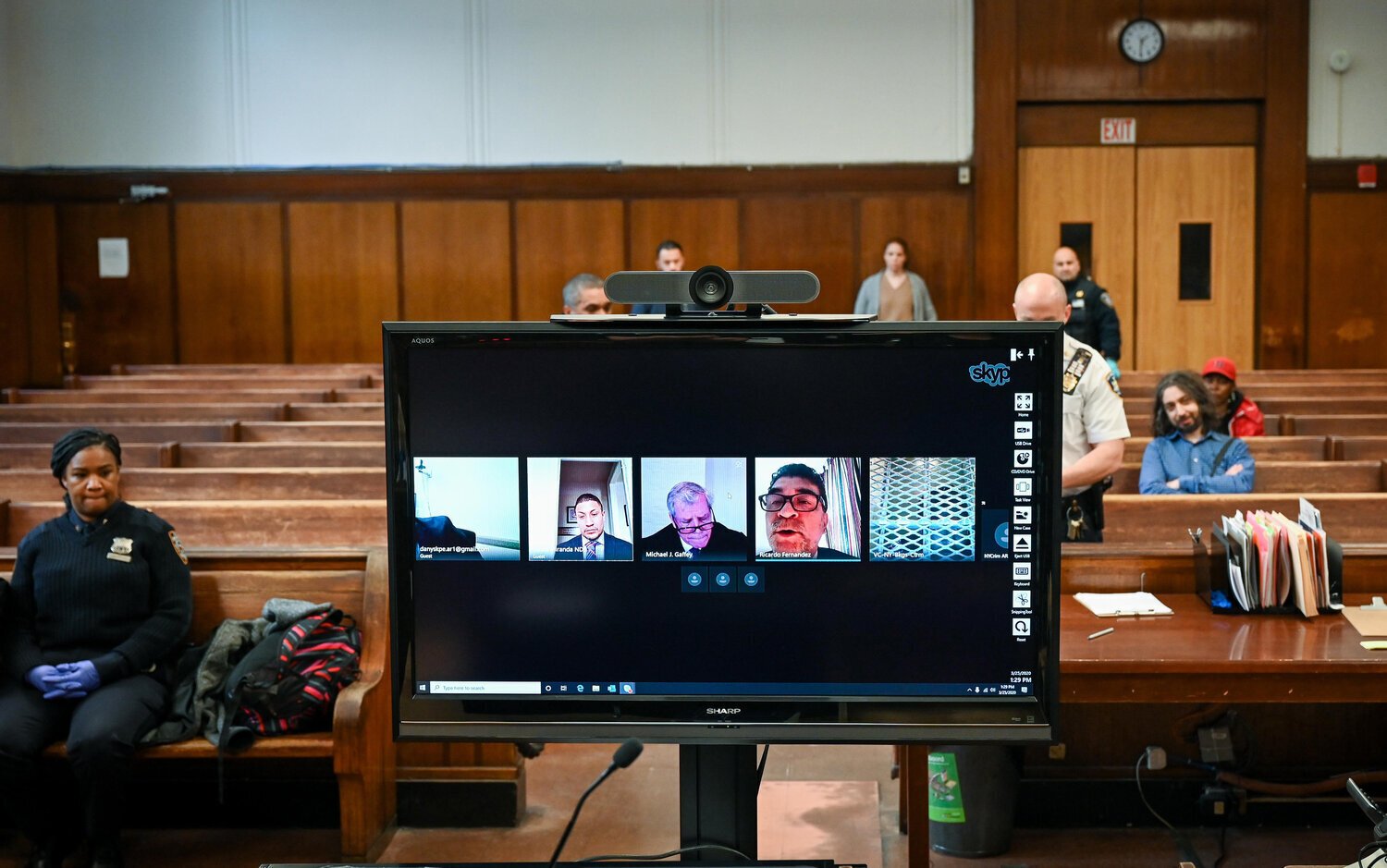
The High Court in SS Precast Sdn Bhd v Serba Dinamik Group Bhd & Ors [2020] MLJU 400 held that the Court has the jurisdiction to direct hearing by way of video conference without the consent of parties and that unaffirmed affidavits may be used in proceedings. The decision was given by Wong Kian Kheong J on 26.4.2020. The facts. The Plaintiff had obtained judgment in default of defence against the defendants on 28.3.2020. On 14.4.2020, the defendants filed applications to set aside the default judgment with a certificate of urgency supported by unaffirmed affidavits. The Prevention and Control of Infectious Diseases (Measures Within Infected Local Areas) Regulations 2020 (‘Covid-19 Regulations’) were in force by then. Following the Court’s enquiry, all parties agreed for the applications to be heard by way of video conference through Skype. At the hearing on 17.4.2020, counsel for both parties again recorded consent for hearing by way of video conference and for the use of unaffirmed affidavit (with the undertaking that a properly sworn affidavit will be filed upon cessation of the Covid-19 Regulations). The Court issued the necessary directions for hearing and also issued an ad interim stay of execution with conditions that included the defendants depositing a certain sum of money with the Plaintiff’s solicitors as stakeholders. Three days later, the Court was informed that the Plaintiff amongst others, was not agreeable to the hearing by way of video conferencing and the use of unaffirmed affidavits. It was contended that the court had no power to hear the applications by video conference and the court cannot consider the unaffirmed affidavits. The Court deliberated on the issues. It was held that as the Plaintiff’s counsel had consented and also actively participated in the proceedings, the Court could proceed by way of video conference. The Court then deliberated whether the Court could have directed hearing by way of video conference if the Plaintiff had objected and held that the Court had the power to issue the direction even if the Plaintiff had objected. The Court referred to the Defendant’s right of access to justice under Article 5(1) of the Federal Constitution and that all subsidiary legislations including the Rules of Courts 2012 must be consistent with the Constitution. O. 32 r 10 and r 11(1) provides the discretion to the Court to issue directions as the Judge thinks fit in order to dispose a matter and the overriding consideration was the interest of justice – consistent with Art 5(1) and O. 1A. In view of the urgency and the movement restrictions, hearing by video conference was necessary and consistent with the defendant’s fundamental right of access to justice under Art 5(1). Not allowing hearing by video conference due to objections by the Plaintiff would render illusory the Defendant’s fundamental right to have access to justice. Hence, even if the Plaintiff had not given their consent, the Court still had the power to order hearing by way of video conference. On the use of unaffirmed affidavits, the Court held that pursuant to O. 41 r 9(2) the Court has the discretion to allow the use of such affidavits in the interest of justice. In view of the movement restrictions that had hindered access to the Commissioner of Oath the Court may allow the use of unaffirmed affidavits provided that the party’s counsel give an undertaking that a sworn affidavit similar to the unaffirmed affidavit will be filed after the lapse of the movements restrictions. This case is of interest as it is the first case that decided on the validity of proceedings by way of video conference. The general opinion has been that in the absence of clear provisions the validity of hearing by way of video conference could be brought to question and one way to overcome this had been by getting the consent of all parties. This pioneering decision by Wong Kian Kheong J however has now decided that consent is not a pre-requisite and the Court has the power to issue such direction even without consent. This case is also notable for allowing the use of unaffirmed affidavits. Whilst defective affidavits had been used before in proceedings with the leave of Court the affidavits were however affirmed but defective for some other reasons. This case could probably be the first that allowed an unsworn affidavit to be used under O. 41 r 9(2). In appreciating the decision, it is important to note the overriding background fact – the Covid-19 outbreak, movement restrictions and the Regulations that were in force. The Court probably had to find an effective way to ensure that access to justice was given to the parties even under such limiting background and hence judicial creativity and innovation was required. Justice and access to justice was the overriding consideration and rightly so. JAYABALAN RAMAN KUTTY

A note on the proposed amendments to the rules to facilitate proceedings via remote communication technology
The Bar Council on 23.5.2020 issued a circular with the proposed amendments to the three rules received from the judiciary on 21.5.2020. Members were invited to provide feedback by 12.00 noon 2.6.2020. The amendments principally is to facilitate the conduct of proceedings via remote communication technology (RCT). Key amendments to the Rules of Court 2012 A new O. 33A is introduced and would include the followings: (1) The Court may direct any proceedings to be conducted via RCT. The RCT is as approved by the Chief Justice. The direction can be given by the Court on its own motion or upon the application of any party. (2) Appearance of any person or parties, evidence of witness or prisoner may be taken via RCT from a specified place on a specified period. The Registrar must be satisfied that sufficient administrative and technical facilities have been put in place. Examination of any person or witnesses may also be directed to be taken via RCT. (3) The direction for proceedings via RCT may be revoked if (1) the RCT stops working or there would be unreasonable delay to wait until a working system becomes available; (2) it was necessary to ensure a fair hearing to the parties; (3) there has been a material change in the circumstances; or (4) it was necessary in the interests of justice. (4) The Registrar may direct the proceedings via RCT to be broadcast to members of the public (5) Judgment or order pronounced in the RCT proceedings is to be treated as if delivered in open court. (6) The direction for proceedings via RCT may also be given during the pre-trial case management (7) If there is a request, the hearing via RCT may be conducted on a weekly holiday or on a public holiday. (8) Unless otherwise provided, application for leave is to be dealt with without any oral hearing. In exceptional circumstances, direction may be given for the application to be dealt with by oral hearing. (9) Examination of witness out of jurisdiction may also be permitted to be done via RCT. Key amendments to the Rules of the Court of Appeal 1994 As follows: (1) Application for leave to appeal may be dealt with without any oral submission unless otherwise directed. (2) If there is a request, the cause or matter may be heard via RCT on a weekly holiday or on a public holiday. (3) A new rule 95A is introduced to enable the Registrar to direct any matter to be heard via RCT and the rules to be applied for RCT proceedings. The Registrar may give the RCT directions on his own motion or upon the application by any party. Key amendments to the Rules of the Federal Court 1995. As follows : (1) Application for leave to appeal may be dealt with without any oral submission unless otherwise directed. (2) The decision on an application for leave is final and conclusive and no re-hearing unless there are exceptional circumstances. (3) A new rule 127A is introduced to enable the Registrar to direct any matter to be heard via RCT and the rules to be applied for RCT proceedings. The Registrar may give the RCT directions on his own motion or upon the application by any party. This note is just to highlight the key proposals for easier understanding and to facilitate feedback. Some of the proposals have far reaching implications (we are not saying they are bad!). We should all take time, study the proposals and provide our feedback.
Trial by way of video conferencing – an effective choice?
The discussions on the proposed amendments to the rules by the judiciary to facilitate proceedings via remote communication technology has raised this question – Is it possible to have an effective and fair trial by way of video conferencing? The answer was given in Nottingham, England on 27.3.2020. First, the facts. By March 2020, Covid-19 had been unleashed. Public safety precautions had been put in place including social distancing. A case came up for trial for three days on 17.3.2020 before the Court of Protection at Nottingham. It was literally a matter of life and death. A man in his seventies has been receiving hydration and nutrition through feeding tube since suffering a major stroke in 2016. His daughter was convinced that he would not want to continue living in such a state as he had expressed a wish that he would rather die than be kept alive as a ‘body in a bed’. She asked the doctors to withdraw the feeding tube believing that to be her father’s wish, against her own wish. The doctors disagreed as medically he was still capable of enjoying certain aspects of his life. The matter was referred to the Court of Protection. The judge was Justice Mostyn. All parties agreed that the matter was important enough not to be adjourned but the outbreak of Covid-19 meant that a conventional courtroom trial was unacceptable due to the health risk to the participants. An alternative solution had to be found. With less than 24 hours before the trial, on the suggestion of one of the solicitors, the Court agreed to conduct the trial by way of video conferencing using the platform Skype for Business. This was going to be the first trial in England and Wales to be held entirely by way of video conferencing. The press was informed and reporters were invited to attend, via remote means, of course. The trial went on as scheduled for three days. The judge, solicitors, parties and witnesses used lap top from their respective home and office throughout England. There were five sets of solicitors. Eleven witnesses including three expert witnesses gave evidence. Two journalists attended to report on the proceedings. Justice Mostyn had to decide the dreaded question – whether the feeding and treatment tube should be withdrawn to allow the man to be set on the path leading to inevitable death. On 27.3.2020 Justice Mostyn delivered the decision. On the pioneering video conference trial, he was impressed and set the tone for the future when he said – “The trial went on almost without a hitch” and “In the current national crisis, it must be expected that hearings will be conducted remotely in this way as a matter of routine practice.” Why is this case of importance? Not only because it was the first full blown trial by video conference; but more because of the various aspects of the proceedings itself – that lawyers would usually be concerned with when it comes to ensuring a fair and effective trial . There was a sense of urgency in the matter. The subject matter was important enough – a matter of life and death. There were multiple parties and a battery of solicitors involved. It was a lengthy trial. There were multiple witnesses. There was expert evidence to be examined – not one but three experts. The facts were complex with scientific data. There was heavy documentation with a total of 929 pages of evidence and witness statements all produced via electronic files. The parties were geographically located at various corners of England. The decision to go by way of video conference was made on the eve of the proceedings with less than 24 hours notice and yet the technical challenges were met and resolved. Access to public was also made possible by having reporters present to report on the proceedings. So, is it possible to have an effective and fair trial by way of video conferencing? This case is a good reliable evidence to suggest a strong ‘yes’. The idea of trial by way of video conferencing or other proceedings by way of electronic means should be warmly welcomed and embraced by lawyers here – provided of course that the necessary legal and regulatory footing must be put in place first. Whilst conventional courtroom hearing is still the gold standard and the preferred choice, hearing via electronic means should be accepted as a reliable alternative along with conventional hearing. Oh yes, so what was the decision in that quantum leap trial? Sitting remotely, on 27.3.2020, Justice Mostyn held that it was categorically contrary to the best interests of the man to be set on the path that will lead to his inevitable death. There was evidence that although he was grossly physically and mentally impaired, he was cognitively active and emotionally aware. He enjoyed eating doughnuts, listening to music and a particular Irish radio station, and became emotional when poems were read to him. With that the application by the daughter to remove the treatment and feeding tubes was dismissed. The full judgment may be reached at A Clinical Commissioning Group v AF, 2020 EWCOP 16. JAYABALAN RAMAN KUTTY

Temporary relief from winding-up for companies
Taking into consideration the financial difficulties that companies will be facing due to the Covid19 pandemic, the government recently introduced temporary changes to the winding-up laws to provide temporary relief from winding-up. This is in line with the development in other economies where similar measures have been implemented to help the recovery of businesses. The key measures were as follows. Under sec. 466(1)(a) of the Companies Act 2016, a creditor may file a petition at the High Court to wind-up the debtor company when the debtor failed to comply with a statutory notice of demand to pay up a debt that was more than RM10,000 within 21 days from the date the notice was served on the debtor. The failure to comply with the notice would result in the debtor company being deemed as insolvent and unable to pay its debts even if the company may be of going concern with assets exceeding the debt amount. On 23.4.2020, the Minister under the Act issued a gazette notification entitled “Companies (Exemption) (No. 2) Order 2020” that imposed a new compliance period of six months for statutory notices served on the debtor company between 23.4.2020 – 31.12.2020. This gazette was issued pursuant to sec. 615 of the Act that gives the Minister the power to exempt application of provisions of the Act. On the same day the Minister also gazetted “Direction of the Minister under paragraph 466(1)(a)” prescribing that the threshold sum for the statutory notice served during the period 23.4.2020 to 31.12.2020 shall be more than RM50,000. Essentially, this means that for winding up notices served between 23.4.2020 – 31.12.2020 the debt must be more than RM50,000 and the debtor’s compliance period with the notice shall be six months. The key point to note from the above is that the changes would be applicable only for the notices served during the period between 23.4.2020 – 31.12.2020. This means that (unless there are further changes) come 1.1.2021 the position in respect of the notices to be issued after that date would revert to as it was before 23.4.2020 viz. RM10,000 and 21 days. In practical sense this means that : (1) a winding up notice that was served before 23.4.2020 (with the debt being more than RM10,000) still carries the 21 days compliance period failing which winding up petition may be filed immediately by the creditor; (2) a winding up notice served at any time between 23.4.2020 – 31.12.2020 must be for a debt more than RM50,000 and to carry a six months compliance period; the creditor may not file the winding up petition until the expiry of six months from the date the notice was served. As an extreme example – a notice served on 31.12.2020 would still require six months compliance period till 30.6.2021 before the creditor may file the petition. (3) a winding up notice to be served on 1.1.2021 would no longer be subject to the six months compliance period or the threshold sum that exceeds RM50,000. The position reverts to a sum exceeding RM10,000 and the compliance period of 21 days. From the changes introduced, a much higher debt is now required before the creditor may resort to wind up the debtor company. The debtor is given more space and time to comply with the creditor’s demand. This temporary measure will provide a much needed relieve especially to the small medium businesses to focus in the short term on rebuilding their business and reorganize their finances instead of being preoccupied with their creditors. However, it must be said that winding-petition is only one of the many means of debt recovery that may be utilized by a creditor. There are other means of recovery available to a creditor such as filing of a civil suit to claim for the debt, garnishment of bank accounts of the debtor and seizure and sale by way of public auction of the assets of the debtor. These alternative means of recovery remain unaffected by the changes stated above. JAYABALAN RAMAN KUTTY