



Salaried and Commission Partners: Not True Partners in Law
By R. Jayabalan COMMISSION PARTNER, SALARIED PARTNER AND ‘PARTNER’ IN LAW FIRMS. Law firms often appoint their young lawyers as ‘salaried partner’ or ‘commission partner’ but their name appears as ‘partner’ in the letterhead, firm profiles and namecard. This may be for marketing purposes e.g to secure panel work, or to commit young lawyers to stay with the firm. What is the legal liability of such salaried partner or commission partner? When a client suffers loss due to fraud or negligence of the firm, is the salaried partner jointly and severally liable with other partners? The High Court here addressed this very issue. Upon examining the Partnership Act, it was held that ‘partnership’ under the Act means sharing profit and loss of the business. Since the commission partner here was only paid a share of the fees collected by him and no share in the profit and loss of the firm, he is not a ‘partner’ under the Act and the ‘jointly and severally liable’ principle that binds partners as liable to third parties do not apply. In short, perhaps, a salaried partner or commission partner is nothing more than a glorified LA! This should be a relief to young lawyers who become salaried partner or commission partner at firms without full understanding of such designation. R. Jayabalan MESSRS R. JAYABALAN

MyBar Games, Penang. Cross country run.

MyBar Games, Penang Bowl!

Court of Appeal Clarifies Rule on Filing Appeals Without Grounds
By R. Jayabalan Appeal Record may be filed without Memorandum of Appeal in the absence of ground of judgment within 90 days. In 2023 in Aliff Syukri case the Court of Appeal held that appeal records filed without memorandum of appeal are defective even in a situation where the High Court judge had not issued the grounds within the stipulated 90 days. This decision caused much consternation among practitioners for the simple reason that: how does the appellant state the grounds (in the memorandum of appeal) to attack the decision if the reasons/grounds for the decision are unknown? Essentially this would require the appellant to speculate and guess the reasons and further state speculative grounds to challenge the decision. Somehow this practical difficulties was lost in the decision in Aliff Syukri! Thankfully another bench of the Court of Appeal has now decided that Aliff Syukri was per incuriam (wrongly decided) and applied the correct approach viz. if the High Court had not provided the grounds within 90 days then the appeal record maybe filed WITHOUT the memorandum of appeal and the memorandum maybe filed within three weeks AFTER receipt of the grounds – this is perhaps the correct interpretation of r. 18(7). The Court of Appeal also recognised the fact of difficulties in drafting the memorandum of appeal without the grounds and that the memorandum in such a case would be a speculative product. Secondly, the Court of Appeal when holding Aliff Syukri as per incuriam also noted that for that decision, no grounds of decision was given and that only broad grounds was given. It was held that ratio decidendi cannot be ascertained from such broad grounds. Happily, this recent decision has removed a major headache for appellants when preparing appeal records in the absence of the grounds within the 90 days. Kudos to the panel. Well done to the lawyers involved. R. Jayabalan MESSRS R. JAYABALAN

Prep for MyBar Games. Had the pleasure of meeting MP YB Jimmy also keeping fit for incoming parliamentary action
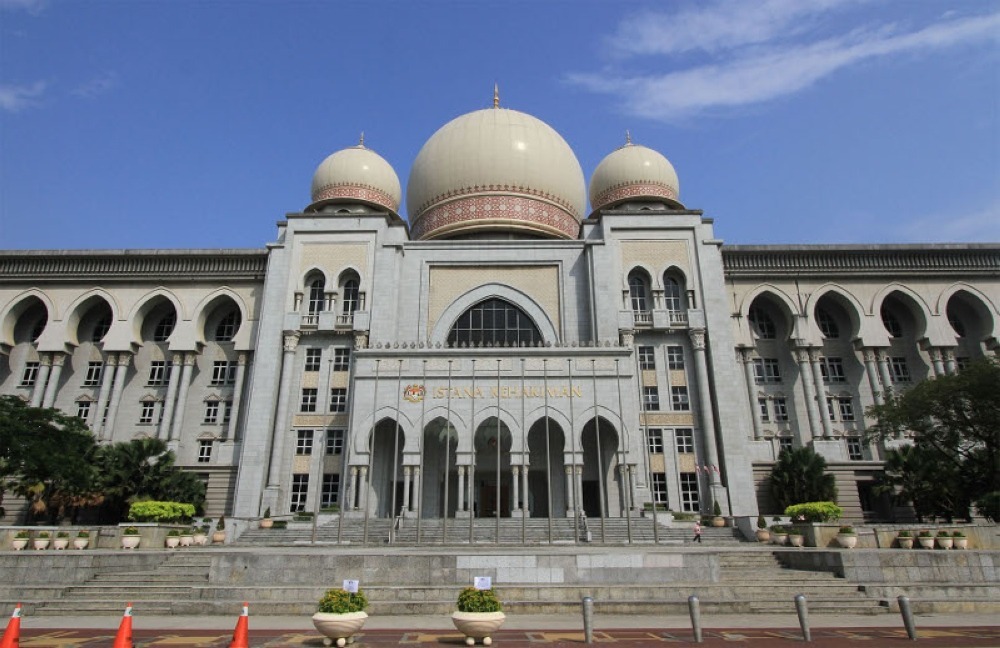
Unconstitutionality: Treatment of pre-Merdeka laws under the federal
By R. Jayabalan Pre-Merdeka and Post-Merdeka Laws The Federal Constitution (FC) is the supreme law of the Federation of Malaysia and any law inconsistent with the FC is void to the extent of the inconsistency. This is trite law – Alma Nudo Atenza v PP (and another appeal) [2019] 3 AMR 101. In its scope of application, the FC recognizes two categories of laws namely pre-Merdeka and post-Merdeka laws and each are treated differently when found to be inconsistent with the FC. Post-Merdeka laws refers to laws passed after 31.8.1957 i.e Merdeka Day. Pre-Merdeka laws refers to laws referred in the FC as “existing laws” and more clearly defined in Article 160(2) as “any law in operation in the Federation or any part thereof immediately before Merdeka Day”. Whilst Article 4(1) declares the FC as the supreme law and laws that are inconsistent with the FC are void, this however only applies to laws passed after Merdeka Day e.g. in Semenyih Jaya Sdn Bhd v Pentadbir Tanah Daerah Hulu Langat [2017] 4 AMR 123, the Federal Court declared s 40D of the Land Acquisition Act 1960 to be unconstitutional for being inconsistent with Article 121 in respect of judicial powers. Article 162 and the judicial modification powers of pre-Merdeka laws Pre-Merdeka laws are given separate treatment under Article 162. Under this provision, the laws in place before the Merdeka Day continue to be in force after Merdeka Day but subject to modifications as may be made under Article 162 or by the Federal or State law. If the pre-Merdeka law had not been modified under Article 162, and found to be inconsistent with the FC, the court applying the law has the powers to apply it with the necessary “modification” to bring the law into accord with the FC. “Modification” is defined in Article 162(7) as including “amendment”, “adaptation” and “repeal”. In Surinder Singh Kanda v Govt of Malaya [1962] MLJ 162 there was inconsistency between the pre-Merdeka law that refers to the powers of the ‘Commissioner of Police’ and the FC that refers to ‘Police Service Commission’. The Privy Council applied Article 162 and read the pre-Merdeka law as modified by reading the reference to Commissioner of Police as Police Service Commission thus bringing the law into accord with the FC. In Kerajaan Negeri Selangor & Ors v Sagong bin Tasi & Ors [2005] 5 AMR 629 the Court of Appeal found that s 12 of the Aboriginal Peoples Act 1954 on land compensation had violated the aboriginals right to adequate compensation under Article 13(2) of the FC. As it was a pre-Merdeka law, the court applied Article 162(6) and modified s 12 to render it harmonious with Article 13(2) by interpreting the word “may” for “shall” and introducing “adequate” before “compensation” – thus incorporating a new phrase “the State Authority shall grant adequate compensation…” into s 12 and brought s 12 into accord with the FC that ensured that the aboriginals constitutional right to adequate compensation was protected. In Ling Towi Sing & Ors v Sino America Tours Corporation Pte Ltd [2022] 4 AMR 117 an attempt was mounted under Article 162(6) to modify s 24(1) of the Limitation Act 1953 on the grounds that s 24(1), a pre-Merdeka law, had contravened the right to equal protection under Article 8(1). That attempt however was not successful as the Court of Appeal had found that s 24(1) had not contravened Article 8(1). Does the power to modify laws under Article 162(6) means that the court makes laws and usurps the role reserved for the legislature by the FC? This was answered by the Court of Appeal in Sagong bin Tasi : “ I am aware that ordinarily we, the judges, are not permitted by our own jurisprudence, to do this. But here you have a direction by the supreme law of the federation that such modifications as the present must be done. That is why we can resort to this extraordinary method of interpretation.” Breaking down Article 162 – Lai Hen Beng v. PP [2024] 1 AMR 249 (enticing married woman) The Court in the earlier cases did not venture into an analysis of Article 162 in order to explain the modification powers. This fortunately was undertaken by the Federal Court led by the Chief Justice recently in Lai Hen Beng v. PP [2024] 1 AMR 249. The accused was charged under s 498 of the Penal Code for enticing a married woman. He contended that s 498 was unconstitutional as it had unfairly discriminated against women in breach of the gender equality in Article 8. It was contended that as s 498 only protects a husband’s right to a peaceful marriage against the interference of a third party without providing similar protection to the wife, there was discrimination against women. The court had little difficulties in finding that s 498 was in violation of the gender equality provision in Article 8(2) as it only entitled husbands to rely on the provision to the exclusion of all wives. There was gender discrimination and s 498 was unconstitutional. This was rather straightforward. The more difficult task for the court however was what to do next with s 498? S. 498 a pre-Merdeka law: It was first held that s 498 was a pre-Merdeka law or “existing law”. The provision had first appeared in the Indian Penal Code in 1860 that was later applied in the Federated Malay States in 1871 and the Unfederated Malay States in 1872. The Federated Malay States (FMS) Penal Code was enacted in 1935 and extended throughout Malaya in 1948. In 1976 the Penal Code was extended to Sabah and Sarawak. In 1997, the FMS Penal Code was revised and renamed the Penal Code (Act 574). Throughout the long history of the Penal Code, s 498 however has remained unchanged from the time of its first appearance in the Indian Penal Code. The options of modification

PREPARING WITNESS STATEMENT
By R. Jayabalan Pre-Merdeka and Post-Merdeka Laws The Federal Constitution (FC) is the supreme law of the Federation of Malaysia and any law inconsistent with the FC is void to the extent of the inconsistency A recent case brought to light some unpleasant issues on the preparation of witness statements. Lawyers have different practices on this. Our practice over the years and proven effective as follows: 1. Interview the client in depth to identify potential witnesses. 2. Identify witnesses who would co- operate voluntarily and those who would require subpoena. 3. Ask the client to arrange for the witness to attend a meeting with the lawyer in person. 4. Interview the witness, take down a detailed statement – in the presence of the client. 5. Inform the witness why the need to call him, and the process involved – examination-in-chief, cross-examination and re-examination. 6. Agree on the witness allowance, travelling and accommodation arrangements for court attendance. 7. Prepare the draft witness statement. 8. Go through the draft with the witness – in the presence of the client. 9. Impress upon the witness that he is free to amend as he wishes and that he must be fully comfortable and confident with every sentence – if he is not certain or uncomfortable remove the sentence. 10. Witness should not feel that he is being forced to say something beyond his wish. 11. There may be varying versions on certain facts between the witness and client – resolve it there and then. 12. Inform that the statement has to be filed in court and once filed it ought not be amended except for very good reason. 13. When a witness is not comfortable to say certain facts but if it requires to be said (e.g he is the best witness on that fact) and important to the client’s case then explain the law on that matter and why it has to be said by him. 14. Go through the finalised statement with the witness again in the presence of the client and get the witness’ confirmation on the contents. 15. Prepare the witness for potential cross-examination on every aspects of the statement and related aspects outside the statement. 16. Email a copy to the witness or get acknowledgement of receipt in writing. 17. Witness statement need not be signed before filing as the statement is to be signed in open court. 18. When filing send a copy to the witness and the client and inform that it has been filed and served. 19. Meet the witness 2 or 3 days before the hearing, go through the statement again and the potential cross examination. Refamiliarise the witness with the bundle of documents. 20. Caution the witness on the importance of consistency throughout his examination and the risk of perjury. 21. Advise the witness on the court etiquette, time to be in court, dress code and how to address the judge and lawyers. 22. Ensure that the witness allowance is paid and his travelling and accomodation is attended to. 23. Meet the witness in court, show where he will be seated. If a case is going on, ask him to sit inside to observe the proceedings to get a feel of what is to come. We trust the above would be of assistance to fellow lawyers.

Justifying dismissal at the Industrial Court and the effect of rejection of reinstatement.
R.Jayabalan When a workman challenges his dismissal from employment at the Industrial Court, is it open to the employer to justify the dismissal on grounds other than that given at the time of the dismissal? What if the workman does not wish to be reinstated to his former position? Does that mean the Court ceases to have jurisdiction over the workman’s claim for unfair dismissal? These issues came up again recently before the Court of Appeal in Melipoly Enterprise Sdn Bhd v. Ong Hong Yeok & Anor. In a decision given on 18.3.2024 the Court answered the questions in favour of the workman. The workman was terminated by way retrenchment on grounds of economic recession and poor sales – as stated in the notice of termination. He claimed unfair dismissal and the dispute was referred to the Industrial Court. At the trial, the employer raised other grounds to justify the dismissal such as poor performance, failure to disclose conflict of interest and sexual harassment. And during the cross-examination when he was asked whether he was seeking reinstatement the workma n answered that he does not wish to be reinstated to his former position. The grounds for the termination The Industrial Court and the High Court held that the Court is only to inquire into the reasons advanced by the employer in the notice of termination and not to go into another reason not relied upon or to find one for it. The Court of Appeal agreed with this and held that the Court must confine itself (only) to the question of whether the grounds in the notice were proven. Reference was made to the well known case of Goon Kwee Phoy v. J& P Coats (M) Sdn Bhd [1981] 2 MLJ 129 that was recently affirmed by the Federal Court in Maritime Intelligence Sdn Bhd v Tan Ah Gek FC [2021] 10 CLJ 663. In Goon Kwee Phoy the Federal Court stated that “If the employer chooses to give a reason for the action taken by him, the duty of the Industrial Court will be to enquire whether that excuse or reason has or has not been made out. If it finds as a fact that it has not been proved, then the inevitable conclusion must be that the termination or dismissal was without just cause or excuse. The proper enquiry of the court is the reason advanced by it and that court or the High Court cannot go into another reason not relied on by the employer or find one for it.” In Maritime Intelligence the Federal Court reaffirmed Goon Kwee Phoy and held that “…. the passage restricts the enquiry of the Industrial Court to the reasons given for the action taken by the employer. That can only mean the reasons operating on the mind of the employer preceding his decision to terminate the workman’s services, which are usually specified in the letter of dismissal.” Hence it is clear that the subsequently put-up grounds of poor performance, conflict of interest and sexual harassment ought not be considered. The Court confined its examination to the reasons in the notice of termination and agreed that the retrenchment on grounds of economic recession and poor sales was not proven. The dismissal was without just cause or excuse and the retrenchment was not bona fide. On the effect of rejection of reinstatement. The employer also contended that the Industrial Court had ceased jurisdiction to inquire into the dispute when the workman said in cross-examination that he did not wish to be reinstated and that he had started his own business after the termination. The employer relied on Holiday Inn Kuching v Elizabeth Lee Chai Siok [1992] 2 CLJ (Rep) 521 where it was held that pursuant to s. 20(1) and (3) of the Industrial Relations Act 1967, the Industrial Court ceases jurisdiction if reinstatement is no longer applied for and that the workman must “want his job back” . The employer also referred to the Federal Court decision in Unilever (M) Holdings Sdn Bhd v So Lai @ Soo Boon Lai & Anor [2015] MLJU 234 where it was held that compensation in lieu of reinstatement may not be awarded when reinstatement is no longer possible. The Court of Appeal rejected the argument and reaffirmed its decision in Sanbos (M) Sdn Bhd v Gan Soon Huat [2021] 4 MLJ 924 that had found Holiday Inn as not good law and held that the Court was seized with the jurisdiction to hear the dispute once the Minister made the reference under s. 20(3) of the Act notwithstanding that the workman may no longer wants the reinstatement and emphasised that the Court derives its jurisdiction from the order of reference by the Minister under s. 20(3). The Court does not cease to have jurisdiction if the remedy of reinstatement is not pursued or when the workman did wish to be “put back into employment”. As for the reliance on Unilever, the Court pointed out the distinction on the facts. In Unilever reinstatement was no longer possible as the workman had reached the retirement age by the time the award was made. Here, the workman’s former post was still available and he has withdrawn from his own business; there was still legal basis for him to be reinstated. Consequently, the Industrial Court award allowing compensation in lieu of reinstatement and backwages was upheld. This decision by the Court of Appeal made it clear once again that employers are bound by the reasons given in the termination notice or the reasons contemplated at the time to justify the termination and cannot look to rely on extraneous reasons that could be considered as afterthought. The decision also emphasized, after Sanbos earlier, that the jurisdiction of the Industrial Court is derived from the reference under the Act and not so much on whether the workman wants his job back. In total, it is a decision that advanced the interest of the workman under

Agreed/Common Bundle of Documents
(R.Jayabalan – Messrs R.Jayabalan) An important direction issued at the pre-trial case management in a civil action is the preparation of the common agreed bundle of documents (CABD or ABD) under O. 34 r. 2(2) Rules of Court 2012 whereby all documents that the parties will be relying upon at the trial are to be compiled into a common bundle for easy reference and examination by the court, witnesses, and parties. The common bundle is to be divided into three parts – Part A, B and C. Part A: documents of which the authenticity and contents are not disputed (marked as ‘agreed and admitted’ or ‘dipersetujui dan diakui’). When a document is in Part A, it means the parties agree that the document exists and the contents are true. The original of the document need not be produced at the trial and the maker of that document need not be called as witness. Documents commonly placed in Part A are official documents from authorities such as identity card, license, birth/death/marriage certificates, passports and certificates. The contents are wholly accepted as true and not disputed at all by the parties and cannot be challenged at the trial. Part B: documents of which the authenticity is not disputed but the contents are disputed (marked as ‘agreed but not admitted’ or ‘dipersetujui tetapi tidak diakui’). When a document is in Part B, it means the existence and authenticity of the document is not disputed but its contents are disputed by the parties. The original document need not be produced and the maker of the document need not be called as witness as the existence and authenticity of the document is no longer an issue. The contents of the document however must be proven by the party relying on that document and this may be done by calling any witness and not necessarily by calling the maker. For example, if the plaintiff is relying on a document issued by a third party and placed in Part B, the plaintiff himself may give evidence on the said document if he has knowledge of the document without calling the third-party maker. Documents usually placed in Part B are medical reports, medical records, invoices, receipts, employment documents, bank statements, correspondences between parties and/or solicitors, and other documents that had transpired between the parties. Part C: documents of which the authenticity and contents are disputed (marked as ‘non-agreed’ or ‘tidak dipersetujui’). When a document is in Part C, it’s very existence is disputed and its contents also disputed – usually due to allegation of fraud or forgery. The party that relies on the document must prove it by calling the maker and producing the original document. Documents that are usually placed in Part C are documents issued by unknown third parties to the action and documents that were outside the knowledge of the parties. Preparation of the agreed common bundle This is the responsibility of the solicitors for the plaintiff. The parties would exchange their respective documents with their views on the placement of the documents. There would be discussions to persuade the parties to change their position between the solicitors or with the assistance of the Court during case management. More so, when there are no reasonable grounds for objections. The objecting party will normally be asked to state the reasons for disputing the existence of the document or for requiring the maker to be called. Where the objection is unreasonable or plainly ‘just to be difficult’, the party forced to call the maker may give notice that they will ask for costs for calling of the maker as witness to be borne by the opposite party in any event. Where there is no agreement, the document will be placed in the lowest agreed part e.g if plaintiff wants the document in Part A but the defendant wants it in Part B, the document will go to Part B, not Part C; if plaintiff wants the document in Part B but the defendant wants it in Part C, the document will go to Part C. The primary objective is always to reduce the Part C documents as this will reduce the number of witnesses hence the length of the trial, and costs of the proceedings. The preparation of the agreed bundle is to be done after the statement of agreed facts and agreed issues for trial is finalised. This is advisable as the agreed facts and issues would have narrowed down the issues for trial and from there the parties would be able to determine the documents that they would require as evidence at the trial to prove their respective case. At the trial Documents in Part A need not be marked as exhibit. It is treated as evidence following reference to it by the witnesses. Documents in Part B also need not be marked as exhibit. The court is usually informed at the outset that the parties have agreed for Part B documents not be marked as exhibit and to be treated as evidence. This would save the court’s time of marking the documents individually as exhibits. It is for the Court to decide at the end of the trial on whether the contents of the Part B documents were proven and on the probative value to be given. The documents under Part C however are to be marked as exhibit following the production of the original by the maker. For a good understanding on the classification of the Part A, B and C documents, see the dissenting judgment in Yeo Ing King v Melawangi Sdn Bhd [2016] 5 AMR 405 and the Court of Appeal decision in Tiow Weng Theong v Melawangi Sdn Bhd [2018] 5 AMR 465. The Federal Court decision in Melawangi Sdn Bhd v Tiow Weng Theong [2020] 2 AMR 505 is a good guide when there is dispute between the parties on the placement of the document. R. Jayabalan